
Answer in brief
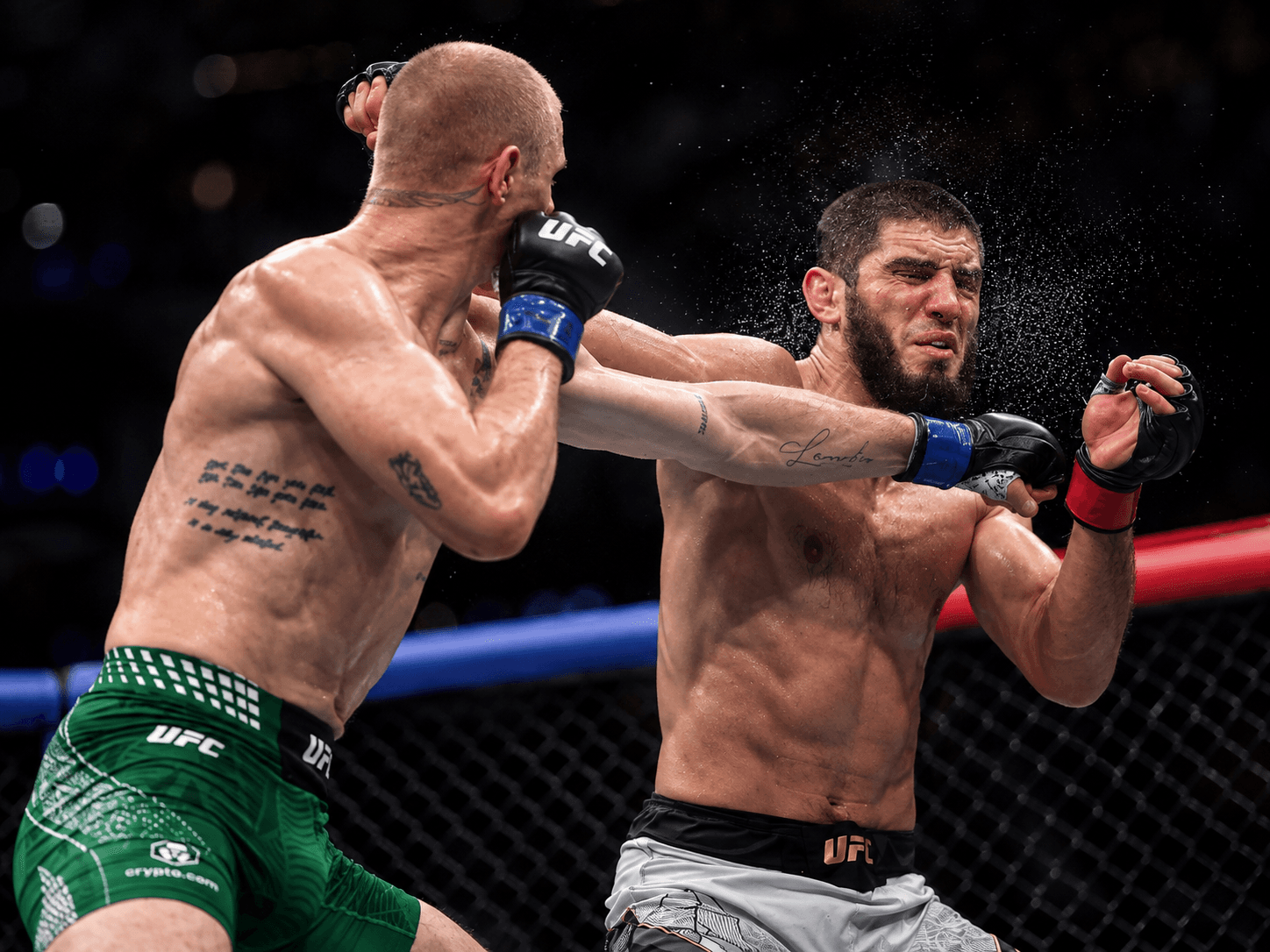
Islam Makhachev kept his welterweight title against Ian Machado Garry on two scorecards of 49-46 and one of 48-47, in a fight where the challenger landed the better strikes across two rounds. Both of those things are true at once, and the reason is that the judging criteria are ranked rather than weighed.
The fight that looked closer than the cards
Islam Makhachev kept his welterweight title against Ian Machado Garry on two scorecards of 49-46 and one of 48-47, in a fight where the challenger landed the better strikes across two rounds. Both of those things are true at once, and the reason is that the judging criteria are ranked rather than weighed.
UFC 330 in Philadelphia produced the argument that follows every close title fight: a challenger who visibly hurt nobody but consistently out-landed the champion in the middle rounds, and a champion who spent long stretches on top without doing obvious damage. The audience scores what it sees, which is punches. The judges score what the criteria list first, which is not punches. That gap is the source of nearly every accusation of a robbery, and in this case the cards were defensible on the rules as written.
What actually happened, round by round
The pattern was clean enough to follow. Makhachev took the first round on grappling. In the second he caught Garry from the clinch with a right hand and a left high kick that briefly dropped him — the single most decisive moment in the fight. In the third, Garry came back and out-landed a champion who appeared to be tiring. The fourth is the round that decides most arguments: Garry landed the better strikes while Makhachev executed multiple takedowns and held top control. In the fifth Makhachev took him down, took his back, and stayed there until the bell. It was Makhachev's seventeenth consecutive UFC win, taking him to 29-1, and it made him the fifth fighter to defend titles in two divisions. Garry falls to 17-2. It was also the hardest night of the champion's recent run by some margin: he was out-landed across two rounds, visibly slowed in the third, and the reaction among fighters watching converged on the same observation — that for the first time in a long while he had looked human inside the octagon. Winning four rounds on two cards and being pushed that far are not contradictory, and this fight was both.
The criteria, in the order they are applied
The criteria are applied in order, and the order is the whole thing: effective striking and grappling first, then effective aggressiveness, then control of the fighting area — and the later criteria are only reached if the earlier one is even.
Under the ten-point must system a judge gives the round's winner ten and the loser nine unless there was clear dominance or a knockdown. The first criterion pairs striking and grappling together and asks which produced more immediate or cumulative impact — not which produced more strikes. A takedown into sustained top control is scored as effective grappling with cumulative impact; a higher volume of low-power strikes from the outside may score lower on the same criterion despite a better statistical line. Aggressiveness and cage control are tiebreakers, reached only if the first criterion cannot separate the fighters, and in practice judges rarely need them.
How to score a round yourself
Score each round as a separate fight and ask one question: who was closer to finishing it.
That question is the practical translation of the first criterion, and it produces the same answer as an experienced judge far more often than counting strikes does. A fighter taken down and held for three minutes was closer to losing than a fighter who landed twelve jabs from range. Write your score before the round ends, do not carry a previous round's impression into the next one, and ignore the commentary, which is narrating drama rather than applying criteria. Doing this for one full card is more instructive than any amount of arguing afterwards.
Where the system genuinely fails
The real weakness is not the order of the criteria but the ten-point scale on top of them.
Almost every round is scored 10-9 regardless of whether it was won by a hair or by four minutes of unanswered control, so a competitive round and a one-sided one are worth the same. That is why a fighter can dominate two rounds, lose three narrowly, and lose the fight. The second genuine problem is that control time is easy to see and easy to over-reward: a judge watching a fighter hold position without advancing or striking may score it as effective grappling when nothing effective is occurring. Both criticisms are legitimate, and neither means the criteria were misapplied here.
Applying it to the middle rounds
Apply it to the fourth round, which is where the disagreement lives. Garry landed the better strikes. Makhachev took him down repeatedly and held top position. Under the criteria the round goes to the fighter whose work carried more impact on the outcome of the fight, and repeated takedowns with sustained top control is the textbook example of effective grappling. Two judges gave the fight 49-46, meaning they scored four rounds to Makhachev; one saw it 48-47, meaning three. Both readings are available within the rules, which is exactly what a competitive fight is supposed to look like on paper.
The case that the cards were wrong
The strongest argument for Garry is that scoring rewards position over damage, and that a fight should be won by the fighter who hurt the other one more. By that standard a challenger who out-struck the champion across the middle rounds and was never seriously threatened after the second has a claim that no amount of top control should erase.
It is a coherent position and it is an argument about what the rules should be, not about what they are. The two 49-46 cards are the harder thing to defend — a four-rounds-to-one reading of a fight in which the challenger clearly took the third is generous — and that is where the honest criticism sits. But the 48-47 card is a normal reading, and the difference between the two is the ordinary spread you get whenever rounds are close and the scale offers only one way to say so.
Why the knockdown in round two mattered more than the statistics
A knockdown is the clearest evidence of impact available to a judge, and impact is the first thing the criteria ask about. Makhachev's right hand and left high kick from the clinch briefly dropped Garry, and that single sequence made the second round difficult to score any other way regardless of the rest of the five minutes.
This is why totals mislead. A fighter can lose the strike count in a round and win it decisively, because the criterion is effect rather than volume, and one moment that visibly changed an opponent's condition outweighs a period of accumulation that did not.
It also shapes the fight that follows. A challenger who has been dropped is more cautious about committing, which reduces the exchanges he needs to win later rounds — one reason the third round read as a comeback rather than as the continuation of a pattern.
The fatigue round, and what it did not change
The third was Garry's clearest round: he out-landed a champion who appeared to be tiring, and nobody scored it any other way. In a different fight that is the turning point, and the fact that it was not is the most instructive thing about this one.
What followed was a return to wrestling in the fourth and fifth, which is the standard response of a fatiguing grappler and also the most reliable way to bank rounds. Taking an opponent down does not require the output that striking does, which is precisely why it becomes the tool of choice late in a hard fight.
For a challenger the lesson is uncomfortable and specific: winning the round in which the champion tires is worth one point, and the champion has three more rounds to take back two. Momentum is a broadcast concept; the scorecards do not have a column for it.
What this means for reading the next decision
The reliable predictor of an argument after a fight is not how close it was but how differently the two fighters accumulated their case. When one fighter's work is visible and the other's is positional, the crowd and the cards diverge, and the divergence has nothing to do with corruption.
The useful habit is to score along with the fight and write it down before the announcement. Most people who are certain a decision was wrong have not scored the rounds, and the exercise of committing to a number before hearing the result is unforgiving in a way that watching is not.
It also makes the genuine controversies easier to identify. There are decisions that cannot be reached under the criteria by any reading, and they are far rarer than the reaction to them suggests — which is why treating every close card as a scandal makes the real ones harder to see.
How to watch the next one
Score the next card yourself, round by round, before the announcements.
Watch each round asking only who came closer to ending the fight, and commit to 10-9 before the horn. Do not adjust for what happened earlier. Ignore strike counts on the broadcast until after you have decided. Compare your card to the official one and, where you differ, identify which criterion produced the gap rather than concluding the judge was wrong. After one full event the criteria stop being abstract, and most disagreements resolve into a difference about a single round.
Keep your own cards
Write down your scores for the fights you watch and keep them. Over a dozen events the record tells you something useful about your own bias — most fans discover they systematically over-reward volume striking and under-reward control, which is the exact gap that produces the sense that decisions are unfair. Comparing your pattern to the official cards is the fastest way to learn the criteria, faster than reading them.
Revisit when the unified rules are amended, since the criteria and their order have been revised more than once and older explanations circulate long after they stop being accurate. Any argument about scoring that does not reference the current wording is an argument about a previous version of the sport.
Editorial conclusion
Makhachev kept the belt because the criteria rank impact and grappling above accumulation, and because he controlled the two rounds that were available to be controlled. Garry was genuinely competitive, won the third, and out-struck the champion in the fourth — and that was worth one round rather than the fight. The interesting question after a card like this is not whether the judges were corrupt. It is whether you would have scored it the same way if you had committed to a number before the horn, and most people who are certain have never tried.
Practical checklist
- First move — Score the next card yourself, round by round, before the announcements.
- What to measure — Score each round as a separate fight and ask one question: who was closer to finishing it.
- Failure mode to watch — The real weakness is not the order of the criteria but the ten-point scale on top of them.
- Assign a visible owner and a review date.
- Separate evidence from interpretation.
- Capture a baseline before changing the process.
Questions and answers
Who won Makhachev vs Ian Machado Garry?
Islam Makhachev retained the UFC welterweight title by unanimous decision at UFC 330 in Philadelphia. The judges scored it 49-46, 49-46 and 48-47. It was his seventeenth consecutive UFC win.
Was the decision close?
Competitive rather than close. Garry clearly took the third and out-struck the champion in the fourth, but two judges scored four of five rounds to Makhachev. Only one card, at 48-47, read it as three rounds to two.
How are UFC fights scored?
By ranked criteria, not weighted ones: effective striking and grappling first, then effective aggressiveness, then control of the fighting area — the later ones reached only if the first cannot separate the fighters. Rounds are 10-9 unless there is dominance or a knockdown.
Why do takedowns beat better striking on the cards?
Because the first criterion asks about impact, not volume. A takedown into sustained top control counts as effective grappling with cumulative impact and can outrank a higher count of low-power strikes from range.
What is the real flaw in MMA judging?
The ten-point scale rather than the criteria. Nearly every round scores 10-9 whether it was won narrowly or overwhelmingly, so a fighter can dominate two rounds, lose three by a hair, and lose the fight.