
Answer in brief
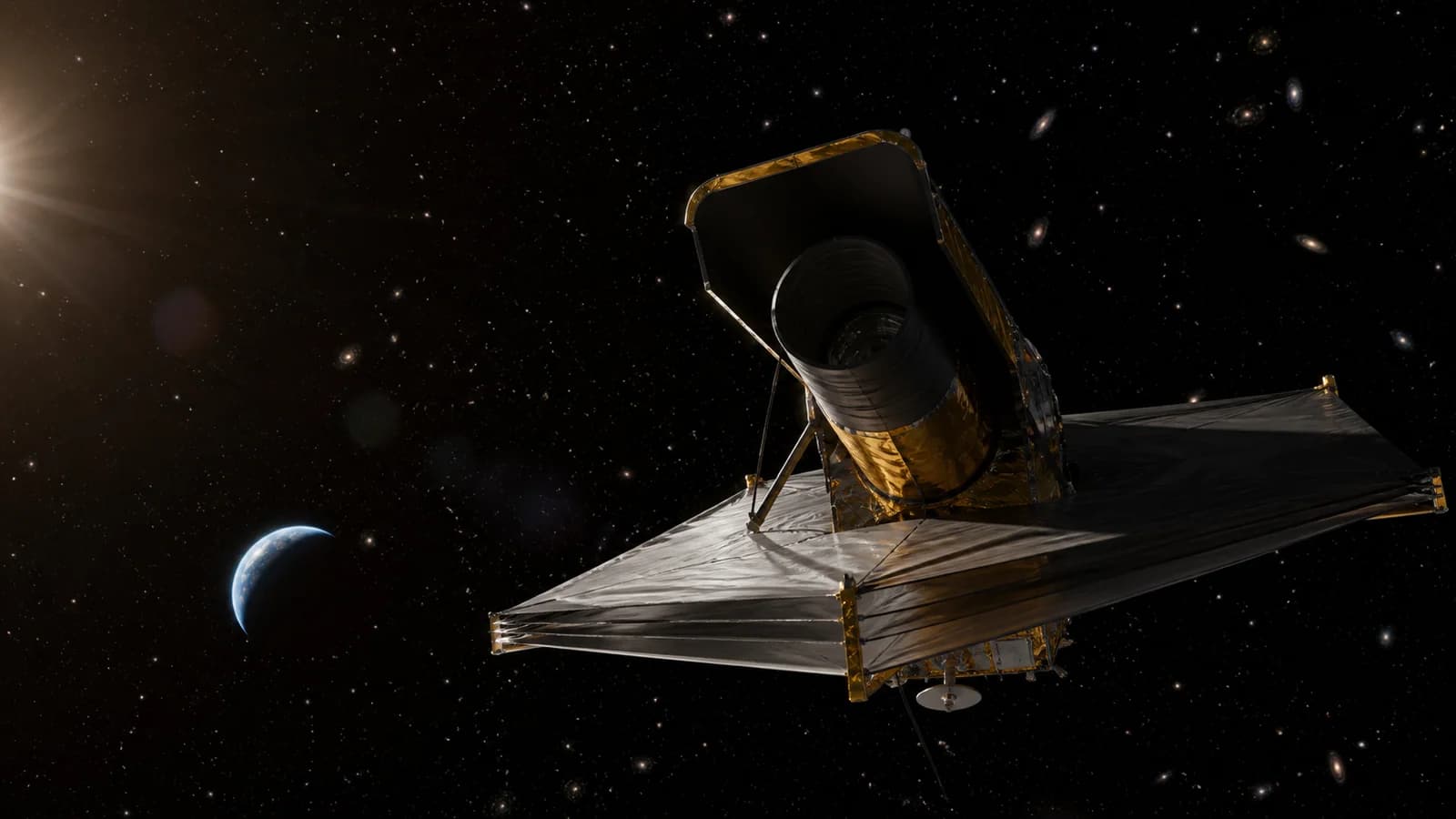
The Roman Space Telescope is now in flight after its 30 August launch. This innovation guide separates a successful liftoff from the commissioning work still ahead.
Roman Space Telescope launch: verified update
NASA confirmed that the Nancy Grace Roman Space Telescope launched on 30 August 2026, with ESA also documenting the mission's international contribution.
Roman Space Telescope launch — This section separates confirmed information from interpretation and keeps the evidence date visible.
Roman Space Telescope launch: date and timeline
Launch is the first milestone, not the start of the science survey; travel, checkout and commissioning must occur before routine observations.
Roman Space Telescope launch — Dates can change, so the linked primary source remains the final reference before a decision.
Roman Space Telescope launch: why it matters
Roman is designed for wide-field infrared surveys that can study dark-energy questions, exoplanets and large areas of the sky.
Roman Space Telescope launch — The useful signal is the consequence for a real reader, not the size of the headline.
Roman Space Telescope launch: who is affected
Scientists, students, mission partners and space enthusiasts should distinguish engineering updates, calibration data and later peer-reviewed discoveries.
Roman Space Telescope launch — Different audiences face different costs, deadlines and choices; the article names that boundary.
Roman Space Telescope launch: what to check
Verify mission status on NASA and ESA pages, because early headlines can confuse launch success with completion of every deployment.
Roman Space Telescope launch — A checkable claim is more valuable than a confident prediction, especially during a live update.
Roman Space Telescope launch: practical next step
Follow the commissioning milestones and compare each confirmed step with the published mission plan rather than predicting discoveries in advance.
Roman Space Telescope launch — The recommended action is deliberately proportional to the evidence available on 1 September.
Roman Space Telescope launch: what happens next
The next meaningful updates concern spacecraft health, instrument checkout and the route toward first science observations.
Roman Space Telescope launch — VJOURNAL will revise the record when an official schedule, rule or verified outcome changes.
space mission timeline comes next: Evidence map and limits
For the space mission timeline comes next question, the useful starting point is a decision that can be checked rather than a prediction that merely sounds complete. A service comparison becomes useful when deliverables, exclusions, approval rounds and handover conditions are written in the same vocabulary. When sources disagree, publish the disagreement and lower the certainty instead of averaging incompatible claims into a neat sentence. Ask what would disprove the preferred interpretation; a decision that cannot fail on paper cannot be responsibly tested in practice. Accessibility, speed and plain language are commercial quality signals because they reduce the work required from a real visitor. Before buying, ask for the smallest verifiable milestone that demonstrates quality without committing the entire budget at once.
For the space mission timeline comes next question, the useful starting point is a decision that can be checked rather than a prediction that merely sounds complete. The most persuasive signal is observable behaviour: what people search, choose, keep, recommend or pay for after the announcement. Do not mix reach with demand; attention can grow while qualified enquiries, retention or purchase intent remain unchanged. Before buying, ask for the smallest verifiable milestone that demonstrates quality without committing the entire budget at once. Translate a broad trend into one measurable hypothesis before changing a campaign, product, workflow or investment plan. The strongest option is the one that can explain its method, show relevant proof and define what happens when assumptions change.
For the space mission timeline comes next question, the useful starting point is a decision that can be checked rather than a prediction that merely sounds complete. Before buying, ask for the smallest verifiable milestone that demonstrates quality without committing the entire budget at once. Read the publication date, update line and source trail together; any one of them alone can create a false sense of freshness. A useful brief identifies the affected audience, the time horizon and the action that could change when new evidence arrives. The most persuasive signal is observable behaviour: what people search, choose, keep, recommend or pay for after the announcement. Define the decision before collecting more material, otherwise the research expands while the practical question remains unanswered.
space mission timeline comes next: Search intent behind the question
For the space mission timeline comes next question, the useful starting point is a decision that can be checked rather than a prediction that merely sounds complete. Accessibility, speed and plain language are commercial quality signals because they reduce the work required from a real visitor. The strongest option is the one that can explain its method, show relevant proof and define what happens when assumptions change. Use comparable criteria for every option: outcome, proof, total cost, lead time, ownership, reversibility and the cost of delay. The cheapest offer can become the most expensive when missing research, rights, testing or support has to be bought later. Before buying, ask for the smallest verifiable milestone that demonstrates quality without committing the entire budget at once.
For the space mission timeline comes next question, the useful starting point is a decision that can be checked rather than a prediction that merely sounds complete. A premium decision is usually won through clarity of scope, not through the largest possible list of features or talking points. Compare the base case with a credible alternative and a downside case so that enthusiasm does not become the only planning assumption. Archive the evidence used for the decision so that a later reviewer can reconstruct why the team acted when it did. Ask what would disprove the preferred interpretation; a decision that cannot fail on paper cannot be responsibly tested in practice. The most persuasive signal is observable behaviour: what people search, choose, keep, recommend or pay for after the announcement.
For the space mission timeline comes next question, the useful starting point is a decision that can be checked rather than a prediction that merely sounds complete. Before buying, ask for the smallest verifiable milestone that demonstrates quality without committing the entire budget at once. The strongest option is the one that can explain its method, show relevant proof and define what happens when assumptions change. A deadline is credible only when dependencies, review time and the cost of rework are visible alongside the launch date. The reader needs a next step proportional to the evidence: monitor, test, compare suppliers, request a brief or postpone the decision. A premium decision is usually won through clarity of scope, not through the largest possible list of features or talking points.
space mission timeline comes next: Signals that matter in practice
For the space mission timeline comes next question, the useful starting point is a decision that can be checked rather than a prediction that merely sounds complete. Small reversible tests protect the budget while revealing whether the audience understood the proposition in the intended way. Keep editorial evidence and commercial recommendations visually distinct so a reader can evaluate both without hidden persuasion. The most persuasive signal is observable behaviour: what people search, choose, keep, recommend or pay for after the announcement. Define the decision before collecting more material, otherwise the research expands while the practical question remains unanswered. Ask what would disprove the preferred interpretation; a decision that cannot fail on paper cannot be responsibly tested in practice.
For the space mission timeline comes next question, the useful starting point is a decision that can be checked rather than a prediction that merely sounds complete. The strongest option is the one that can explain its method, show relevant proof and define what happens when assumptions change. Define the decision before collecting more material, otherwise the research expands while the practical question remains unanswered. The cheapest offer can become the most expensive when missing research, rights, testing or support has to be bought later. A premium decision is usually won through clarity of scope, not through the largest possible list of features or talking points. Record which claim comes from a primary document, which comes from reporting and which is the newsroom's own analysis.
For the space mission timeline comes next question, the useful starting point is a decision that can be checked rather than a prediction that merely sounds complete. Small reversible tests protect the budget while revealing whether the audience understood the proposition in the intended way. Compare the base case with a credible alternative and a downside case so that enthusiasm does not become the only planning assumption. A useful brief identifies the affected audience, the time horizon and the action that could change when new evidence arrives. The cheapest offer can become the most expensive when missing research, rights, testing or support has to be bought later. Archive the evidence used for the decision so that a later reviewer can reconstruct why the team acted when it did.
space mission timeline comes next: Options, trade-offs and alternatives
For the space mission timeline comes next question, the useful starting point is a decision that can be checked rather than a prediction that merely sounds complete. Record which claim comes from a primary document, which comes from reporting and which is the newsroom's own analysis. When sources disagree, publish the disagreement and lower the certainty instead of averaging incompatible claims into a neat sentence. Ask what would disprove the preferred interpretation; a decision that cannot fail on paper cannot be responsibly tested in practice. A useful brief identifies the affected audience, the time horizon and the action that could change when new evidence arrives. A premium decision is usually won through clarity of scope, not through the largest possible list of features or talking points.
For the space mission timeline comes next question, the useful starting point is a decision that can be checked rather than a prediction that merely sounds complete. The strongest option is the one that can explain its method, show relevant proof and define what happens when assumptions change. Good search content answers the narrow question first and then earns attention with context that a result-page snippet cannot provide. A deadline is credible only when dependencies, review time and the cost of rework are visible alongside the launch date. The reader needs a next step proportional to the evidence: monitor, test, compare suppliers, request a brief or postpone the decision. A premium decision is usually won through clarity of scope, not through the largest possible list of features or talking points.
For the space mission timeline comes next question, the useful starting point is a decision that can be checked rather than a prediction that merely sounds complete. Treat numbers as dated observations rather than permanent truths, especially when markets, platforms or public policy can move quickly. A deadline is credible only when dependencies, review time and the cost of rework are visible alongside the launch date. Ask what would disprove the preferred interpretation; a decision that cannot fail on paper cannot be responsibly tested in practice. Estimate total cost across preparation, production, review, launch and maintenance rather than treating the initial quote as the whole budget. The strongest option is the one that can explain its method, show relevant proof and define what happens when assumptions change.
space mission timeline comes next: Budget, timing and risk
For the space mission timeline comes next question, the useful starting point is a decision that can be checked rather than a prediction that merely sounds complete. A service comparison becomes useful when deliverables, exclusions, approval rounds and handover conditions are written in the same vocabulary. Look for incentives behind every public statement and ask who benefits if the most optimistic reading becomes the accepted one. The reader needs a next step proportional to the evidence: monitor, test, compare suppliers, request a brief or postpone the decision. Define the decision before collecting more material, otherwise the research expands while the practical question remains unanswered. Ask what would disprove the preferred interpretation; a decision that cannot fail on paper cannot be responsibly tested in practice.
For the space mission timeline comes next question, the useful starting point is a decision that can be checked rather than a prediction that merely sounds complete. The most persuasive signal is observable behaviour: what people search, choose, keep, recommend or pay for after the announcement. Do not mix reach with demand; attention can grow while qualified enquiries, retention or purchase intent remain unchanged. Translate a broad trend into one measurable hypothesis before changing a campaign, product, workflow or investment plan. A service comparison becomes useful when deliverables, exclusions, approval rounds and handover conditions are written in the same vocabulary. Small reversible tests protect the budget while revealing whether the audience understood the proposition in the intended way.
For the space mission timeline comes next question, the useful starting point is a decision that can be checked rather than a prediction that merely sounds complete. Small reversible tests protect the budget while revealing whether the audience understood the proposition in the intended way. Treat numbers as dated observations rather than permanent truths, especially when markets, platforms or public policy can move quickly. Ask what would disprove the preferred interpretation; a decision that cannot fail on paper cannot be responsibly tested in practice. Separate a confirmed fact from an interpretation, because a confident headline is not the same thing as a verified operating signal. Do not mix reach with demand; attention can grow while qualified enquiries, retention or purchase intent remain unchanged.
space mission timeline comes next: A practical implementation sequence
For the space mission timeline comes next question, the useful starting point is a decision that can be checked rather than a prediction that merely sounds complete. Record which claim comes from a primary document, which comes from reporting and which is the newsroom's own analysis. When sources disagree, publish the disagreement and lower the certainty instead of averaging incompatible claims into a neat sentence. Good search content answers the narrow question first and then earns attention with context that a result-page snippet cannot provide. A premium decision is usually won through clarity of scope, not through the largest possible list of features or talking points. Ownership must be explicit: name the person responsible for the next check, the next update and the final go-or-stop decision.
For the space mission timeline comes next question, the useful starting point is a decision that can be checked rather than a prediction that merely sounds complete. Compare the base case with a credible alternative and a downside case so that enthusiasm does not become the only planning assumption. Accessibility, speed and plain language are commercial quality signals because they reduce the work required from a real visitor. Do not mix reach with demand; attention can grow while qualified enquiries, retention or purchase intent remain unchanged. A useful brief identifies the affected audience, the time horizon and the action that could change when new evidence arrives. The strongest option is the one that can explain its method, show relevant proof and define what happens when assumptions change.
For the space mission timeline comes next question, the useful starting point is a decision that can be checked rather than a prediction that merely sounds complete. Separate a confirmed fact from an interpretation, because a confident headline is not the same thing as a verified operating signal. When sources disagree, publish the disagreement and lower the certainty instead of averaging incompatible claims into a neat sentence. Define the decision before collecting more material, otherwise the research expands while the practical question remains unanswered. Good search content answers the narrow question first and then earns attention with context that a result-page snippet cannot provide. Do not mix reach with demand; attention can grow while qualified enquiries, retention or purchase intent remain unchanged.
space mission timeline comes next: How to compare the final decision
For the space mission timeline comes next question, the useful starting point is a decision that can be checked rather than a prediction that merely sounds complete. Keep editorial evidence and commercial recommendations visually distinct so a reader can evaluate both without hidden persuasion. The cheapest offer can become the most expensive when missing research, rights, testing or support has to be bought later. Ask what would disprove the preferred interpretation; a decision that cannot fail on paper cannot be responsibly tested in practice. A deadline is credible only when dependencies, review time and the cost of rework are visible alongside the launch date. Translate a broad trend into one measurable hypothesis before changing a campaign, product, workflow or investment plan.
For the space mission timeline comes next question, the useful starting point is a decision that can be checked rather than a prediction that merely sounds complete. Use comparable criteria for every option: outcome, proof, total cost, lead time, ownership, reversibility and the cost of delay. Record which claim comes from a primary document, which comes from reporting and which is the newsroom's own analysis. Define the decision before collecting more material, otherwise the research expands while the practical question remains unanswered. Estimate total cost across preparation, production, review, launch and maintenance rather than treating the initial quote as the whole budget. Accessibility, speed and plain language are commercial quality signals because they reduce the work required from a real visitor.
For the space mission timeline comes next question, the useful starting point is a decision that can be checked rather than a prediction that merely sounds complete. Treat numbers as dated observations rather than permanent truths, especially when markets, platforms or public policy can move quickly. Record which claim comes from a primary document, which comes from reporting and which is the newsroom's own analysis. A premium decision is usually won through clarity of scope, not through the largest possible list of features or talking points. Ask what would disprove the preferred interpretation; a decision that cannot fail on paper cannot be responsibly tested in practice. The most persuasive signal is observable behaviour: what people search, choose, keep, recommend or pay for after the announcement.
Practical checklist
- space mission timeline comes next · 1: Confirm the dated source trail
- space mission timeline comes next · 2: Write the decision and success measure
- space mission timeline comes next · 3: Compare scope, proof and total cost
- space mission timeline comes next · 4: Run a small reversible test
- space mission timeline comes next · 5: Assign an owner and review date
Questions and answers
space mission timeline comes next: What is actually verified?
For the space mission timeline comes next question, the useful starting point is a decision that can be checked rather than a prediction that merely sounds complete. Use comparable criteria for every option: outcome, proof, total cost, lead time, ownership, reversibility and the cost of delay. Good search content answers the narrow question first and then earns attention with context that a result-page snippet cannot provide. Ownership must be explicit: name the person responsible for the next check, the next update and the final go-or-stop decision. Accessibility, speed and plain language are commercial quality signals because they reduce the work required from a real visitor. The strongest option is the one that can explain its method, show relevant proof and define what happens when assumptions change.
space mission timeline comes next: Who should act on this signal?
For the space mission timeline comes next question, the useful starting point is a decision that can be checked rather than a prediction that merely sounds complete. Archive the evidence used for the decision so that a later reviewer can reconstruct why the team acted when it did. Ask what would disprove the preferred interpretation; a decision that cannot fail on paper cannot be responsibly tested in practice. A service comparison becomes useful when deliverables, exclusions, approval rounds and handover conditions are written in the same vocabulary. Ownership must be explicit: name the person responsible for the next check, the next update and the final go-or-stop decision. Look for incentives behind every public statement and ask who benefits if the most optimistic reading becomes the accepted one.
space mission timeline comes next: What should a buyer compare?
For the space mission timeline comes next question, the useful starting point is a decision that can be checked rather than a prediction that merely sounds complete. Small reversible tests protect the budget while revealing whether the audience understood the proposition in the intended way. Ownership must be explicit: name the person responsible for the next check, the next update and the final go-or-stop decision. Treat numbers as dated observations rather than permanent truths, especially when markets, platforms or public policy can move quickly. Accessibility, speed and plain language are commercial quality signals because they reduce the work required from a real visitor. Look for incentives behind every public statement and ask who benefits if the most optimistic reading becomes the accepted one.
space mission timeline comes next: Which risks can change the answer?
For the space mission timeline comes next question, the useful starting point is a decision that can be checked rather than a prediction that merely sounds complete. Compare the base case with a credible alternative and a downside case so that enthusiasm does not become the only planning assumption. Record which claim comes from a primary document, which comes from reporting and which is the newsroom's own analysis. The most persuasive signal is observable behaviour: what people search, choose, keep, recommend or pay for after the announcement. Use comparable criteria for every option: outcome, proof, total cost, lead time, ownership, reversibility and the cost of delay. The cheapest offer can become the most expensive when missing research, rights, testing or support has to be bought later.
space mission timeline comes next: What is the sensible next step?
For the space mission timeline comes next question, the useful starting point is a decision that can be checked rather than a prediction that merely sounds complete. Record which claim comes from a primary document, which comes from reporting and which is the newsroom's own analysis. Ownership must be explicit: name the person responsible for the next check, the next update and the final go-or-stop decision. Good search content answers the narrow question first and then earns attention with context that a result-page snippet cannot provide. Define the decision before collecting more material, otherwise the research expands while the practical question remains unanswered. Accessibility, speed and plain language are commercial quality signals because they reduce the work required from a real visitor.