
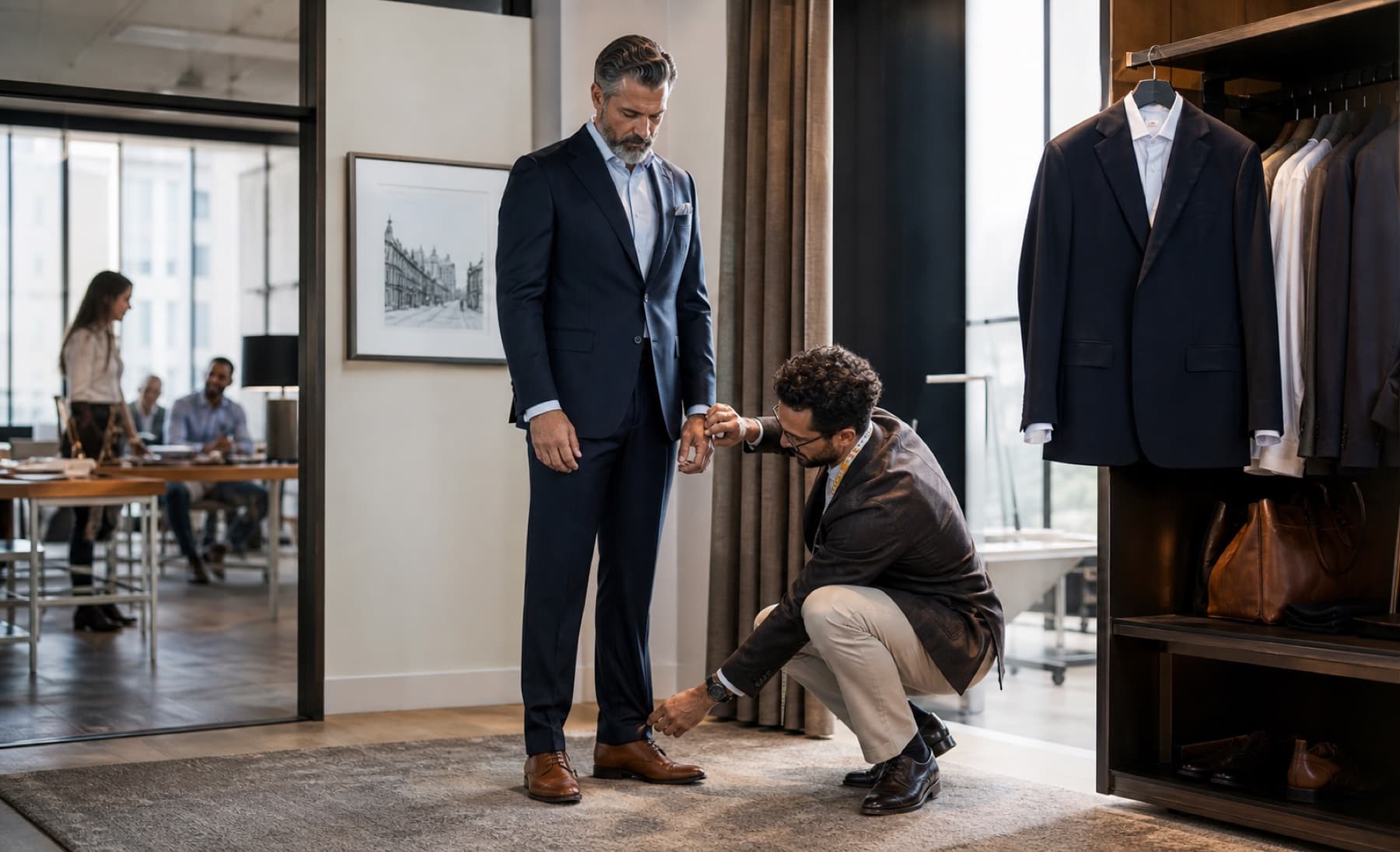
Answer in brief
cover meetings, office days and work travel with a practical business outfit matrix. Build a business wardrobe that covers the actual week, dress codes and travel without becoming a row of identical
Verified facts
- Source review
- Sources were checked on 29 August 2026.
- Reader need
- business wardrobe stylist for office meetings and work travel
The real decision — Business wardrobe styling
Business wardrobe styling should solve one precise decision: cover meetings, office days and work travel with a practical business outfit matrix. That sentence is the editorial test for every recommendation that follows.
Checkpoint 1 matters because the brief must cover meetings, office days and work travel with a practical business outfit matrix; record the decision beside Role and calendar map so the rationale survives the meeting.
Working evidence is visible in Role and calendar map, Business outfit system, Alteration and purchase sequence. The first artifact addresses this buyer problem: The client needs business wardrobe styling without wasted purchases or an unclear styling scope. The remaining outputs must help the client choose, combine, approve or repeat a decision after the stylist has left. Checkpoint 12 matters because the brief must cover meetings, office days and work travel with a practical business outfit matrix; record the decision beside Alteration and purchase sequence so the rationale survives the meeting.
A practical check for this section is to write the situation before selecting references, because an outfit for a board meeting and one for a profile portrait are judged differently. Save the observation beside Business outfit system; if it changes the recommendation, revise the system before adding another item. This keeps advice tied to behaviour, fit and the stated context rather than taste alone.
Who this is for: cover meetings, office days and work travel with a…
This search need becomes useful only when it meets the calendar, existing clothes, fit notes, climate, care tolerance and purchase ceiling. Build a business wardrobe that covers the actual week, dress codes and travel without becoming a row of identical suits. A shopping link or invented personality type cannot replace that evidence.
Checkpoint 2 matters because the brief must cover meetings, office days and work travel with a practical business outfit matrix; record the decision beside Business outfit system so the rationale survives the meeting.
The written boundary supports this outcome: A usable business wardrobe styling system with decisions, combinations and next actions recorded. It records inclusions, exclusions, meetings, fitting access, sourcing rules, returns, revisions and acceptance; clothes, tailoring, travel and delivery remain separate unless explicitly included. Checkpoint 13 matters because the brief must cover meetings, office days and work travel with a practical business outfit matrix; record the decision beside Role and calendar map so the rationale survives the meeting.
A practical check for this section is to photograph what is worn most and what is avoided, then note the reason in plain language instead of guessing from taste alone. Save the observation beside Alteration and purchase sequence; if it changes the recommendation, revise the system before adding another item. This keeps advice tied to behaviour, fit and the stated context rather than taste alone.
Evidence before buying: cover meetings, office days and work travel with a…
Working evidence is visible in Role and calendar map, Business outfit system, Alteration and purchase sequence. The first artifact addresses this buyer problem: The client needs business wardrobe styling without wasted purchases or an unclear styling scope. The remaining outputs must help the client choose, combine, approve or repeat a decision after the stylist has left.
Checkpoint 3 matters because the brief must cover meetings, office days and work travel with a practical business outfit matrix; record the decision beside Alteration and purchase sequence so the rationale survives the meeting.
For the decision to cover meetings, office days and work travel with a practical business outfit matrix, work moves from context audit to a representative test and only then to the complete system. Stage 5 uses Business outfit system to remove a defined doubt rather than create presentation theatre. Checkpoint 14 matters because the brief must cover meetings, office days and work travel with a practical business outfit matrix; record the decision beside Business outfit system so the rationale survives the meeting.
A practical check for this section is to test one complete combination while walking, sitting and under the relevant light before approving a larger wardrobe direction. Save the observation beside Role and calendar map; if it changes the recommendation, revise the system before adding another item. This keeps advice tied to behaviour, fit and the stated context rather than taste alone.
Scope and boundaries: cover meetings, office days and work travel with a…
The written boundary supports this outcome: A usable business wardrobe styling system with decisions, combinations and next actions recorded. It records inclusions, exclusions, meetings, fitting access, sourcing rules, returns, revisions and acceptance; clothes, tailoring, travel and delivery remain separate unless explicitly included.
Checkpoint 4 matters because the brief must cover meetings, office days and work travel with a practical business outfit matrix; record the decision beside Role and calendar map so the rationale survives the meeting.
Acceptance tests whether Role and calendar map works in the stated scenario and verifies the documented outcome: A usable business wardrobe styling system with decisions, combinations and next actions recorded. A moodboard without sizes, combinations, continuity or priorities cannot close this commission. Checkpoint 15 matters because the brief must cover meetings, office days and work travel with a practical business outfit matrix; record the decision beside Alteration and purchase sequence so the rationale survives the meeting.
A practical check for this section is to record sizes, alteration notes, retailer return windows and substitutions beside each sourced item so the shortlist remains operational. Save the observation beside Business outfit system; if it changes the recommendation, revise the system before adding another item. This keeps advice tied to behaviour, fit and the stated context rather than taste alone.
Process without theatre: Build a business wardrobe that covers the actual week,…
For the decision to cover meetings, office days and work travel with a practical business outfit matrix, work moves from context audit to a representative test and only then to the complete system. Stage 5 uses Business outfit system to remove a defined doubt rather than create presentation theatre.
Checkpoint 5 matters because the brief must cover meetings, office days and work travel with a practical business outfit matrix; record the decision beside Business outfit system so the rationale survives the meeting.
Business wardrobe styling starts with a useful brief that tests the request against real dates, situations, existing assets, measurements, budget boundary and the decision owner. It also names Alteration and purchase sequence as a required handoff, which is enough to price the work honestly. Checkpoint 16 matters because the brief must cover meetings, office days and work travel with a practical business outfit matrix; record the decision beside Role and calendar map so the rationale survives the meeting.
A practical check for this section is to name the person who can approve the direction and the latest useful decision date; late feedback changes sourcing, fitting and return options. Save the observation beside Alteration and purchase sequence; if it changes the recommendation, revise the system before adding another item. This keeps advice tied to behaviour, fit and the stated context rather than taste alone.
Acceptance and handoff: cover meetings, office days and work travel with a…
Acceptance tests whether Role and calendar map works in the stated scenario and verifies the documented outcome: A usable business wardrobe styling system with decisions, combinations and next actions recorded. A moodboard without sizes, combinations, continuity or priorities cannot close this commission.
Checkpoint 6 matters because the brief must cover meetings, office days and work travel with a practical business outfit matrix; record the decision beside Alteration and purchase sequence so the rationale survives the meeting.
Business wardrobe styling should solve one precise decision: cover meetings, office days and work travel with a practical business outfit matrix. That sentence is the editorial test for every recommendation that follows. Checkpoint 17 matters because the brief must cover meetings, office days and work travel with a practical business outfit matrix; record the decision beside Business outfit system so the rationale survives the meeting.
A practical check for this section is to accept the work against a real calendar or shot list, not against whether every reference feels fashionable in isolation. Save the observation beside Role and calendar map; if it changes the recommendation, revise the system before adding another item. This keeps advice tied to behaviour, fit and the stated context rather than taste alone.
Your next useful step: cover meetings, office days and work travel with a…
Business wardrobe styling starts with a useful brief that tests the request against real dates, situations, existing assets, measurements, budget boundary and the decision owner. It also names Alteration and purchase sequence as a required handoff, which is enough to price the work honestly.
Checkpoint 7 matters because the brief must cover meetings, office days and work travel with a practical business outfit matrix; record the decision beside Role and calendar map so the rationale survives the meeting.
This search need becomes useful only when it meets the calendar, existing clothes, fit notes, climate, care tolerance and purchase ceiling. Build a business wardrobe that covers the actual week, dress codes and travel without becoming a row of identical suits. A shopping link or invented personality type cannot replace that evidence. Checkpoint 18 matters because the brief must cover meetings, office days and work travel with a practical business outfit matrix; record the decision beside Alteration and purchase sequence so the rationale survives the meeting.
A practical check for this section is to store the final combinations, reasons, measurements and care constraints in one place so future purchases can be compared with the same rules. Save the observation beside Business outfit system; if it changes the recommendation, revise the system before adding another item. This keeps advice tied to behaviour, fit and the stated context rather than taste alone.
Practical checklist
- Role and calendar map
- Business outfit system
- Alteration and purchase sequence
- The real decision — cover meetings, office days and work travel with a practical…
- Who this is for — Build a business wardrobe that covers the actual week, dress codes…
- Evidence before buying — cover meetings, office days and work travel with a practical…
Questions and answers
What should I prepare before Business wardrobe styling?
This search need becomes useful only when it meets the calendar, existing clothes, fit notes, climate, care tolerance and purchase ceiling. Build a business wardrobe that covers the actual week, dress codes and travel without becoming a row of identical suits. A shopping link or invented personality type cannot replace that evidence.
How is the scope fixed for “When Business wardrobe styling is worth commissioning”?
The written boundary supports this outcome: A usable business wardrobe styling system with decisions, combinations and next actions recorded. It records inclusions, exclusions, meetings, fitting access, sourcing rules, returns, revisions and acceptance; clothes, tailoring, travel and delivery remain separate unless explicitly included.
Are clothes included for “When Business wardrobe styling is worth commissioning”?
No. Unless the signed scope says otherwise, garments, tailoring, returns, travel and delivery are paid separately. For this case, the decision criterion is specific: cover meetings, office days and work travel with a practical business outfit matrix. Build a business wardrobe that covers the…
How is the work accepted for “When Business wardrobe styling is worth commissioning”?
Acceptance tests whether Role and calendar map works in the stated scenario and verifies the documented outcome: A usable business wardrobe styling system with decisions, combinations and next actions recorded. A moodboard without sizes, combinations, continuity or priorities cannot close this commission.
Can we start with a smaller step for “When Business wardrobe styling is worth commissioning”?
Yes. Test one representative outfit, scene or wardrobe segment before expanding Business wardrobe styling.