
Answer in brief
Thirteen releases ordered by result, each with a plot summary, its box office and one fact worth knowing.
The year budget stopped predicting anything
Thirteen releases ordered by result, each with a plot summary, its box office and one fact worth knowing.
This list is ordered by what each film actually did rather than by preference, and every entry carries three things: what it is about, the number that describes its performance, and one fact worth knowing before you buy a ticket. Where a film is unreleased that is stated plainly and no figures are invented.
What actually happened in 2026
The year produced results that break the usual relationship between budget, reviews and revenue. A $750,000 horror film became the eighth-biggest release of the year. A biopic with roughly 38 per cent approval passed a billion dollars. A science-fiction film with 95 per cent approval passed $330 million. Meanwhile Spider-Man: Brand New Day reached $2 billion in seventeen days, a pace only Avengers: Endgame has beaten.
Three different businesses in one year
Franchise, format and asymmetric bet all worked in the same year.
Read across the thirteen and three separate businesses appear. There is the franchise business, where the audience is inherited and the job is not to lose it. There is the format business, where the presentation itself is the product and scarcity is engineered into distribution. And there is the asymmetric bet, where a film costs so little that any commercial result at all is transformative. Nothing in 2026 suggests one model beat the others; the year rewarded all three and punished films that fell between them.
Multiple of budget is the number nobody prints
Gross against cost, not gross alone.
Multiple of budget is the most useful single number and almost nobody reports it. Obsession returned more than six hundred times its production cost. Spider-Man returned a large multiple of a very large number, which is a different achievement and a less efficient one. Gross alone tells you how big a film was; gross against cost tells you how well it was judged, and those rankings look nothing alike.
What this list cannot tell you
Two entries are unreleased and December forecasts are unreliable.
Two entries here are unreleased, and December films are the most commonly over-forecast objects in entertainment. Projections circulating for Avengers: Doomsday and Jumanji: Open World are estimates with no data behind them. There is also a survivorship problem in any list like this: the failures of 2026 are not on it, and the same strategy that produced Obsession produced many micro-budget films nobody has heard of.
If you are only watching four of them
If you are choosing what to actually watch rather than what to read about, the shortlist narrows quickly. Project Hail Mary is the best-reviewed genuine hit. The Odyssey is the one that rewards a specific screening format and loses most on a phone. Obsession is the year's best value for the price of a ticket. Spider-Man: Brand New Day is the event. Everything else on this list is a good evening rather than a necessary one.
The strongest argument against this ranking
The obvious objection is that a ranking led by box office is a ranking of marketing budgets, not films. The best work of 2026 is largely absent, the top of the list is franchise product, and a guide organised this way tells readers what was sold hardest rather than what is worth their time.
That objection is fair and the list is built to answer it. Box office is used as the organising fact because it is verifiable and comparable, not because it is a judgement of quality, and every entry separates the numbers from the recommendation. The films worth watching are named explicitly in the section above, and three of them are not the highest earners here. A ranking has to be ordered by something; ordering by something checkable is more honest than ordering by taste and calling it authority.
1. Spider-Man: Brand New Day — $2 billion in seventeen days

Four years have passed since No Way Home. Peter Parker lives alone in a New York that no longer knows his name, having erased himself from the memory of everyone he loved in order to save them. He fights crime anonymously, with no support network and nobody to return to, and the film spends its opening stretch establishing exactly how much that costs him.
As the demands on him intensify, the pressure triggers a physical evolution that threatens his existence — the film's central complication, and the reason it is not simply another sequel. Running alongside it is a strange new pattern of crimes that brings forward one of the most powerful threats he has faced. Destin Daniel Cretton directs, with Tom Holland and Zendaya leading and Callum Turner and Monica Barbaro in support.
The commercial result has no precedent at this speed. It opened to roughly $355-360 million worldwide, the largest opening weekend ever recorded, and crossed $2 billion in seventeen days. Only Avengers: Endgame has reached that mark faster, in eleven days, and only eight films in history have reached it at all. It was also the second-fastest film ever to $1 billion internationally.
Divide the numbers and the pace becomes concrete: $2 billion across seventeen days averages roughly $118 million a day, sustained, across every market simultaneously. That is a distribution achievement as much as a demand one, and it depends on a simultaneous global release that only a handful of studios can physically execute.
The detail worth knowing is structural rather than financial. The premise required the film to spend its first act with a protagonist nobody in the story recognises. Studios normally refuse to isolate a hero from the supporting cast audiences pay to see, because the emotional shorthand of an ensemble is what carries a third sequel. Doing it anyway, at this budget, is the boldest structural decision in any 2026 blockbuster.
It is worth watching on the largest screen you can reach, and it is the one film on this list where the event and the film are genuinely the same purchase. If you have not seen No Way Home the opening will not land, because the entire premise is built on a memory the audience is expected to have and the characters do not.
2. Michael — the film reviews could not stop
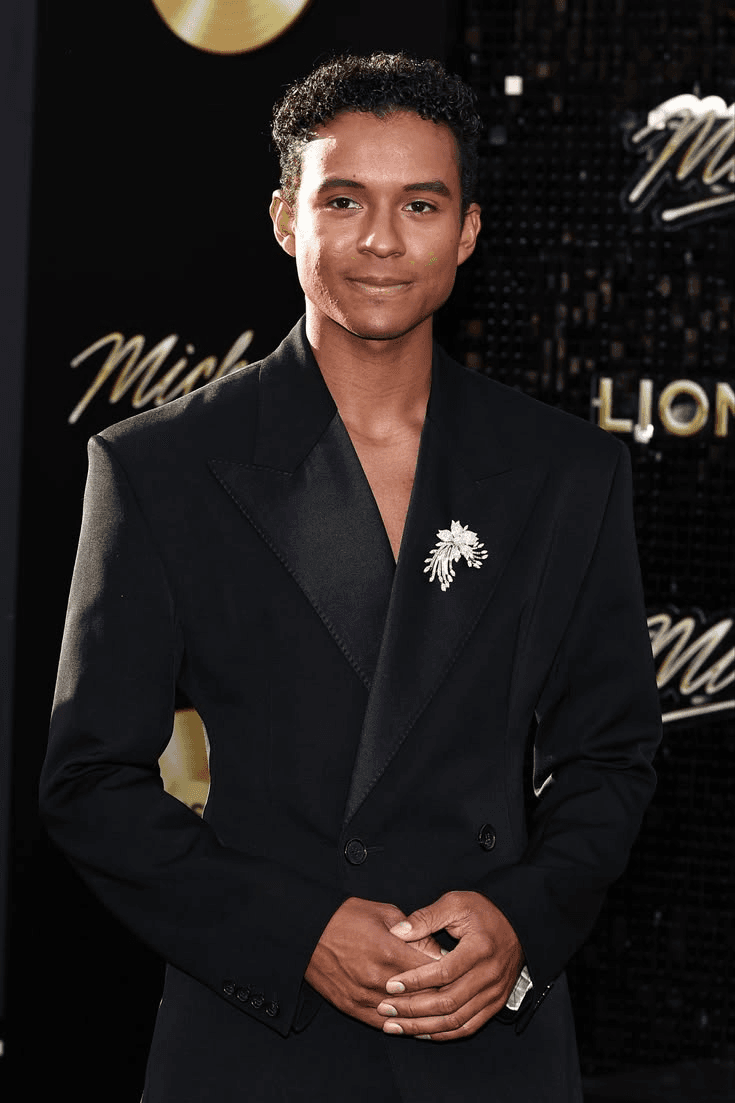
A biographical account of Michael Jackson, with Jaafar Jackson — the singer's nephew — playing him in his first screen role. The film concentrates on the construction of the career rather than attempting a full-life account, which is the choice that determines everything else about it.
That focus is both its defence and its problem. A film about how the work was made can stay on ground the estate and the audience agree on; a film about a whole life cannot. Reviewers largely treated the result as evasive, and the approval score settled around 38 per cent.
It did not matter. The film opened at roughly $97 million, took $340.1 million domestically and passed $1 billion worldwide, becoming the highest-grossing music biopic ever made and the biggest biopic of any kind. Against the 38 per cent approval, it is the clearest data point of the year on the gap between reviews and receipts.
The useful comparison is with Project Hail Mary further down this list: 95 per cent approval, roughly $330 million worldwide. Michael scored less than half the approval and took three times the money. Anyone still using review aggregates to forecast box office should treat those two lines as the end of that argument.
The unrepeatable part is the casting. A performer with no acting credits was cast for resemblance and family access, and that combination produced a billion dollars. No other production can copy it, because no other production has a nephew who looks like the subject. This publication covered that dynamic in its profile of Jaafar Jackson, and the conclusion there holds: the interesting question is not how Michael performed but what he does next in a role where neither resemblance nor access helps.
Watch it if you want the year's most instructive commercial object rather than its best film. The performance is genuinely the reason to go; the screenplay around it is the part reviewers were describing.
There is one more number worth isolating. A $97 million opening for a biopic is roughly triple what the format normally produces, and biopics historically build slowly on word of mouth rather than arriving large. Michael inverted that shape, which means the audience was not persuaded by the film — it had already decided before release, and reviews arrived too late to matter to anyone.
3. The Super Mario Galaxy Movie — the year's first billion

Mario's second feature moves the action off the Mushroom Kingdom and into space, following the structure of the Galaxy games rather than the original platformers. The scale change is the point: the first film had to establish a world, and this one is free to spend its time in it.
Chris Pratt returns as Mario, with Charlie Day as Luigi, Anya Taylor-Joy as Princess Peach and Jack Black as Bowser. The new additions are the interesting part of the list — Donald Glover as Yoshi, Brie Larson as Rosalina, Benny Safdie as Bowser Jr., Glen Powell as Fox McCloud and Keegan-Michael Key as Toad.
Released on 1 April, it took $34.5 million on its opening day, $131.7 million across three days and $190.8 million across five, then became the first film of 2026 to pass $1 billion worldwide. It finished the period as the top domestic earner at $427.1 million, and set the biggest global opening weekend of the year until Toy Story 5 took that record in June.
The cast list is the strategic story. Adding Fox McCloud pulls Star Fox — a separate Nintendo franchise with its own history — into the same continuity. That is a studio building a shared universe out of a games catalogue, and it is precisely the move Marvel made with post-credit scenes fifteen years ago, applied to intellectual property that already has decades of audience attachment.
The difference is that Marvel had to establish its characters before it could cross them over. Nintendo does not: an audience that has played these games for thirty years arrives already knowing who Fox McCloud is. That shortens the build phase from a decade to a single casting announcement, which is why this approach is likely to be copied rather than admired.
Watch it with children or not at all. It is competent, expensive and entirely uninterested in anyone who did not grow up with the source, which is a rational position given that the source has sold hundreds of millions of copies.
There is a caution buried in the strategy. A shared universe assembled from separate franchises works while each addition feels like a reward and stops working the moment it feels like homework, and the history of cinematic universes is mostly a record of studios failing to notice which side of that line they are on. Nintendo has the advantage of a catalogue deep enough to keep the additions surprising for a decade.
4. Toy Story 5 — the biggest opening of the year

The fifth Toy Story arrived on 19 June. Tom Hanks returns as Woody and Tim Allen as Buzz Lightyear, with Joan Cusack as Jessie and Tony Hale as Forky, alongside new voices including Greta Lee as Lilypad, Bad Bunny as Pizza with Sunglasses and Conan O'Brien as Smarty Pants.
Bad Bunny appearing in a Pixar film is a small detail with a large implication, and this publication has covered him elsewhere in its people coverage. A studio casting a Latin music artist in a legacy animated franchise is buying an audience segment, not a voice, and the fact that it works is a comment on where mainstream attention now sits.
It opened to $160 million domestically and $312 million globally: the biggest opening weekend of any film in 2026, the largest in franchise history in every territory, and the second-best domestic debut for an animated film behind Incredibles 2. AMC reported its busiest weekend of the year in the United States on the back of it.
The number that matters is that second-best-ever animated debut, because the franchise is thirty-one years old. Almost nothing in entertainment opens larger in its fifth instalment than in its first. A series that does is describing an audience that has aged into bringing its own children, which converts a film series into something closer to a generational ritual.
That also explains the commercial ceiling. A ritual audience turns up reliably and does not grow, which is why the opening was enormous and the conversation afterwards was quiet. Compare it with Obsession, which opened at a tenth of the size and stayed in cinemas because people kept telling each other about it.
Watch it if you have a history with the franchise. If you do not, there is no entry point here and the film makes no attempt to build one.
The franchise arithmetic is worth spelling out. Thirty-one years between the first film and the fifth means the children who saw the original are now bringing children of their own, and a $160 million opening from that audience is two ticket purchases per household rather than one. Animated films are the only category where the passage of time enlarges the buying unit instead of eroding it, and Pixar is the studio that has held a franchise long enough to collect on it twice.
5. Obsession — $750,000 in, $458 million out

A hopeless romantic wishes that his long-time crush would fall in love with him. The wish is granted, and a sinister enchantment follows. That is the whole premise, and its economy is the reason the film works: everything that happens is a consequence of one decision made in the first ten minutes.
Curry Barker wrote and directed. The cast is Michael Johnston, Inde Navarrette, Cooper Tomlinson, Megan Lawless and Andy Richter — a group with no marquee name among them, which is part of why the budget stayed where it did. This publication profiled Inde Navarrette earlier in the year.
It was made for roughly $750,000, opened on 15 May to $17.2 million domestically and has grossed about $458.4 million worldwide. That is a return of more than six hundred times the production budget. It is the highest-grossing horror release of the year and the eighth-highest-grossing film of 2026 overall, ahead of a Star Wars spin-off, a DC epic and a Scream sequel.
Run the arithmetic against the rest of this list and the scale of the anomaly appears. Spider-Man: Brand New Day took roughly four and a half times more money, on a budget that is conventionally reported in the hundreds of millions. On multiple of cost, Obsession did not merely beat it — the two are not on the same scale of measurement.
The acquisition is what the industry will actually study. Focus Features bought the film for $14 million after its festival premiere, with Blumhouse coming aboard afterwards and Jason Blum serving as executive producer. A distributor paid roughly nineteen times the negative cost and still cleared one of the best margins in modern studio history, which tells you the film was mispriced by every buyer who passed on it first.
Watch this one. It is the best value on the list by a wide margin, it does not require a large screen to work, and it is the only film here whose commercial story is as interesting as the film itself.
It also changes what a horror budget means. For most of the last decade the genre's economic argument has been that a $5 million film can return fifty times its cost; Obsession did that at one-seventh the budget and twelve times the multiple, which resets the reference point every acquisitions executive now works from. Expect a wave of sub-million-dollar horror acquisitions in 2027, and expect most of them to demonstrate that the number was never the reason this one worked.
6. Minions & Monsters — the one that quietly cleared $473 million
Illumination's 2026 animated release, which spent the year among the highest earners without ever dominating a news cycle or generating an argument.
It has grossed about $473.5 million worldwide, which places it above The Odyssey and above every live-action drama released this year.
No freely licensed photograph exists for this title, which is why this entry runs without an image. Posters and stills are copyrighted and this publication does not reproduce them under any circumstances, including when a picture would make the page look more complete.
The commercial point stands without one. A film almost nobody argued about out-earned most of the films everybody did, and it did so without a records narrative, a format gimmick or a review controversy to carry it.
That is worth stating because lists like this one are biased toward films with a story attached. Illumination has built a business on releases that are never the most discussed film of any given month and are frequently among the most profitable, and the absence of discourse is closer to a deliberate strategy than an accident.
Watch it if you have small children and forty other options have already been exhausted. Nothing about it rewards adult attention, and nothing about it is trying to.
It is worth being precise about what that means commercially. Illumination operates on production budgets well below the animated-feature average and releases with a marketing rhythm that does not depend on being culturally central, which converts a modest cost base into reliable margin. Nothing about the model requires a hit; it requires the absence of a failure.
That is a genuinely different business from the one every other studio on this list is running. Disney, Pixar and Marvel all need events; Illumination needs a calendar slot and an audience of children who have not yet developed preferences. The second is a far easier thing to arrange, and $473.5 million is what it pays.
Read against Obsession at the other end of the list, the two describe the same insight from opposite directions. One made money by costing almost nothing and being talked about constantly; the other by costing moderately and being talked about not at all. Both beat the films in the middle.
7. The Odyssey — the format was the product

Christopher Nolan's adaptation of Homer, shot for IMAX 70mm presentation. The scale of the production and the specificity of the format were central to how the film was sold, and in commercial terms the format was arguably the product.
It has taken more than $225 million domestically and about $368 million worldwide. Those are strong numbers for a literary adaptation and modest ones beside the animated films on this list, which is the correct way to read them: the film was never competing for the same audience.
Travis Scott attended the New York premiere on 14 July, the same event at which the photograph above was taken. This publication has covered both that premiere and Nolan's format strategy separately.
The commercially interesting fact is that the film was built around a projection format that only a small number of venues worldwide can actually run. Restricting supply of the definitive version turned a screening into an event with a fixed capacity, and audiences travelled to reach one. That is scarcity engineering applied to distribution rather than to ticket pricing.
The risk in that approach is rarely discussed. A film whose definitive version exists in a few dozen rooms is a film most of its audience will see in a compromised form, and the gap between the experience being sold and the experience most people get is a reputational liability that only works while the film is genuinely worth the journey.
Watch it in IMAX 70mm if you can reach a screening, and consider waiting if you cannot. It is the one film on this list that loses most of its argument on a television, and the only one where the format is a legitimate reason to travel.
The choice also filters the audience in a specific way. A format that requires travel selects for people who will plan an evening around a film rather than default into one, and that audience behaves differently: it books further ahead, it is less price-sensitive, and it does not walk out. Those are the economics of theatre and opera rather than of cinema, and applying them to a wide release is the genuinely novel part.
Whether it generalises is the open question. Nolan can do this because his name sells the constraint; a director without that leverage restricting distribution would simply be reducing availability. The strategy is real and it may not be transferable, which is the same thing this publication concluded about several of the artists in its music coverage this year.
8. Project Hail Mary — the best-reviewed hit of the year

Ryan Gosling plays Ryland Grace, a middle-school science teacher who wakes aboard an interstellar spacecraft with no memory of how he got there. As his memory returns he learns that he is the sole survivor of a mission sent beyond the solar system to find the cause of a phenomenon dimming the sun, which if unchecked will end life on Earth.
The centre of the film is not the mission but the friendship that develops between Grace and Rocky, a multi-legged alien built with practical effects. Phil Lord and Christopher Miller direct, from Andy Weir's 2021 novel — the same author who wrote The Martian, and the same basic proposition of competence under isolation.
It opened to $80.5 million domestically and $60.4 million from 82 international markets, a $140.9 million global start that was the biggest debut of 2026 at the time. By its third weekend it had passed $219 million domestically and $330 million worldwide, making it the first 2026 release to clear $200 million at home. It holds a 95 per cent approval score.
Set that against Michael: 38 per cent approval and a billion dollars, versus 95 per cent and a third of that. The two films are the clearest available demonstration that critical consensus and commercial outcome have decoupled almost entirely, and that neither predicts the other in either direction.
Rocky being a practical effect rather than a digital character is the choice that made the film work. An alien the actor can physically look at changes the performance opposite it, and audiences register that difference even when they cannot name it. It is also a decision that costs more in build time and saves nothing in post, which is why so few productions make it.
Watch it first if you are only watching one thing from 2026. It is the best-reviewed genuine hit of the year, it works on any screen size, and it is the only film here that would still be worth recommending if it had made no money at all.
One more comparison closes the point. Amazon MGM needed a theatrical win and got the biggest debut of the year to that date with a science-fiction film carrying no franchise, no prior instalment and no established audience beyond the novel's readership. That is the hardest kind of opening to manufacture, and it happened on reviews and word of mouth rather than on brand.
9. The Devil Wears Prada 2 — the legacy sequel that landed

The sequel to the 2006 film, returning to the magazine world two decades later, with Meryl Streep back as Miranda Priestly.
It took $209.3 million domestically, placing it fourth among 2026 domestic earners — a result almost nobody forecast for a comedy sequel arriving twenty years after the original.
Legacy sequels usually fail, and the reason is structural rather than creative. They arrive after the audience's affection has cooled, they carry a cast whose careers have moved on, and they land in a cultural context where the original's premise no longer means what it meant.
This one avoided that by arriving into a media industry that had visibly changed in exactly the direction the original satirised. The first film was about the absurd power of a print magazine editor; the sequel exists in a world where that power has largely dissolved. That gives the return an argument rather than only a cast reunion, which is the difference between a sequel and a revival.
The commercial lesson generalises. A legacy sequel works when the intervening years have made the original premise more interesting rather than less, and fails when the years have simply passed. Almost every studio treats the gap as a marketing problem to be solved with nostalgia; it is actually a content problem, and only the material can solve it.
Watch it if you liked the original. It is the rare sequel that has a reason to exist beyond the rights being available.
The casting economics are worth a note as well. A legacy sequel depends on the original cast returning, which hands enormous leverage to the actors and usually inflates the budget past the point where the film can work. Comedies are particularly exposed, because they cannot recover an inflated budget with international grosses the way action films can.
That this one cleared $209.3 million domestically suggests the negotiation stayed disciplined, and the result is the rare legacy sequel that is profitable rather than merely large. Studios chasing this outcome tend to copy the nostalgia and skip the discipline, which is why the category's overall record remains poor.
10. Nuremberg — the year's most serious film

A courtroom account of the Nuremberg trials, released in March and among the best-reviewed films of the first quarter.
It has not competed with the tentpoles commercially and was never built to. No box-office comparison on this list flatters it, and none should be attempted.
Its value here is as a control case. A year in which a $750,000 horror film outgrossed most studio releases invites the conclusion that budget no longer predicts anything and that every film is now playing an asymmetric-bet game.
A serious drama holding its own critically without chasing that outcome is a useful correction. Some films are made to be seen by a smaller audience over a longer period, and judging them by opening weekend is a category error that this kind of list makes constantly.
It also anchors the year's other extreme. Between a $2 billion superhero release and a courtroom drama about the legal architecture built after the Second World War, 2026 contained a wider range of theatrical purposes than any single ranking can honestly order.
Watch it if you want the year's most substantial two hours. Do not expect it to be enjoyable in the way anything else on this list is.
The release timing tells its own story. March is where studios place films they respect and do not expect to sell, safely distant from both awards season and the summer calendar, and a well-reviewed drama landing there is being positioned for a long tail rather than an opening weekend.
That positioning is increasingly the only viable route for adult drama in cinemas. The audience exists but does not turn out in the first three days, which means any film built for it has to survive a period where the numbers look like failure before they look like anything. Most studios no longer have the patience, which is why so few of these get made.
Rami Malek's presence is worth noting for a practical reason. Serious historical drama increasingly depends on a lead whose name can secure financing without inflating the budget past recovery, and the pool of actors who can do that has narrowed considerably over the last decade.
That constraint shapes which subjects get made at all. A story that cannot attract one of perhaps twenty bankable dramatic leads generally does not reach production, regardless of merit, which is a quieter form of gatekeeping than the one usually complained about.
11. Coyote vs. Acme — the film that was shelved and came back

A live-action and animation hybrid in which Wile E. Coyote sues the Acme Corporation over the repeated failure of its products. Will Forte, John Cena and Lana Condor star. It reached cinemas on 28 August.
Its release is the notable event rather than its takings. The film was completed, shelved by its original studio, and subsequently reached cinemas anyway — a sequence that almost never ends this way.
Almost no completed studio film that gets written off for a tax benefit is ever seen by anyone. The write-off is only available if the asset is not exploited, which creates a direct financial incentive to destroy the commercial life of a finished work.
That makes this the rarest object on the list. It is a film that survived a process specifically designed to ensure it did not, and it exists publicly because enough people objected loudly enough to make the shelving more expensive than the release.
There is a wider point in that, and it is not really about cinema. Any industry where a finished asset is worth more destroyed than sold has an accounting problem rather than a market one, and the only reliable correction is that the destruction becomes visible.
Watch it partly as an artefact. Whatever the film turns out to be, the fact that it can be watched at all is the more interesting half of the story.
The economics behind the shelving are worth understanding because they are not unique to this film. A completed feature can be written down against tax liability only if it is never commercially exploited, which means the accounting value of destruction can exceed the expected value of a modest release.
That structure has existed for years and was mostly invisible, because a film nobody sees generates no complaint. What changed here is that the people who made it, and an audience that had seen the trailer, made the shelving publicly expensive — which is the only mechanism that has ever reversed one of these decisions.
There is one more reason to pay attention. The premise — a character suing the manufacturer whose products keep failing him — is a joke that has been available for seventy years and that nobody built a film around until now.
Whether the execution justifies the wait is a separate question from whether the idea was worth having, and the idea plainly was.
12. Jumanji: Open World — the December bet on familiarity

The next Jumanji, directed by Jake Kasdan with Dwayne Johnson, Kevin Hart, Jack Black and Karen Gillan returning. Scheduled for 11 December.
It is unreleased at the time of writing, so no performance figures exist. Any projection currently circulating is an estimate with no data behind it and should be read as marketing rather than information.
The interesting detail is the scheduling. It opens one week before Avengers: Doomsday, and counter-programming a Marvel release by seven days is a statement that the studio believes its audience is genuinely separate rather than merely adjacent.
That conviction is rarer than it sounds. Most studios move away from a Marvel date by a month or more, on the assumption that the same people cannot be sold two large films in successive weeks. Holding a date seven days out is a bet that the family-comedy audience and the superhero audience overlap far less than the industry assumes.
It is also a testable bet, which makes it worth watching as a business event. If Jumanji holds its second weekend against the Avengers opening, the received wisdom about December congestion is wrong and several studios will reroute their 2027 calendars accordingly.
Watch it if the previous two worked for you. There is no indication this one is attempting anything different, and that is presumably deliberate.
There is a second reading of the date that is less flattering. Opening a week before the largest release of the year also guarantees a single clean weekend before every screen in the country is reallocated, which is a way of harvesting one strong number and accepting a steep drop.
Both readings are consistent with the schedule, and the second weekend will distinguish them. A film that holds is a film with its own audience; a film that collapses was collecting a slot rather than defending a franchise.
The subtitle is also doing work. Open World is a video-game term, and applying it to a franchise whose premise is already a game inside a film signals a structural change rather than a new adventure in the same shape.
If that is more than marketing, it is the most interesting thing about the release. If it is not, the title will be the only part of the film that referenced it.
13. Avengers: Doomsday — the one the year ends on

The next Avengers film, scheduled for 18 December.
Unreleased at the time of writing. No box-office figures exist, nothing about its performance can be stated, and this entry makes no attempt to estimate any.
What can be said is structural. 2026 has already produced a $2 billion Spider-Man film, and both releases sit within the same studio orbit. A year that ends with two tentpoles at that scale is a year in which the theatrical calendar has been arranged around one company's schedule.
That is the most consequential fact on this entire list, and it is easy to miss because it is not about any individual film. When one release schedule determines when every other studio can safely open, the market has a structural dependency that no single good or bad opening weekend will change.
The counterweight is everything else here. Obsession did not need a calendar slot, a franchise or a format; it needed $750,000 and word of mouth. A theatrical business in which both of those things are true at once is healthier than one in which only the first is.
Watch it if you have followed the previous films, which by this point is the only sensible basis on which to decide.
It is worth stating plainly what this entry is not. It is not a recommendation, a prediction or an assessment, because the film does not exist publicly yet and nothing verifiable can be said about it.
It appears on a list of thirteen films to watch in 2026 because it is scheduled inside 2026 and because a guide that omitted it would be less useful, not because anything is known about its quality.
That distinction matters more than it might seem. Most year-end lists quietly blend released films with unreleased ones and let the reader assume every entry has been seen, which is how anticipation gets laundered into recommendation. Two entries here have not been seen by anyone outside the productions, and both say so.
A final note on how to use this list in December. When both remaining films open, the useful figure will not be the opening weekend, which is a measure of marketing, but the second — which is a measure of the film.
Every entry above that has already released is judged here on results rather than expectations, and these two will be updated on the same basis once results exist.
How to choose from this list
Decide whether you are buying an event or a film before you pick.
Decide first whether you are picking an event or a film, because they are different purchases. For an event, check the format: The Odyssey in IMAX 70mm and Spider-Man on the largest screen available are worth travelling for, and both lose most of their argument at home. For a film, ignore gross entirely and read the approval score against the runtime. Then check whether the title is still in cinemas, since several of these have moved to home release. Finally, if you have one ticket left this year, spend it on the one you cannot reproduce on a television.
What December will change
Two of the thirteen have not opened. Avengers: Doomsday on 18 December and Jumanji: Open World on 11 December will both report opening figures within days of release, and either could reorder the top of this list. The more informative number will be the second weekend, since December releases hold differently from summer ones.
Reassess after the first full weekend of January, when December releases have reported two or three weekends and the year's final ordering is stable. Treat pre-release projections as marketing rather than data.
Editorial conclusion
Thirteen films, and no single lesson connects them. A biopic that reviewers disliked took a billion dollars. A horror film made for less than the catering budget of a blockbuster returned six hundred times its cost. A director restricted his film to a format most cinemas cannot project and audiences travelled to find one. What 2026 actually demonstrated is that the theatrical business has stopped having one shape, and that the most reliable predictor of a film's result is no longer its budget, its reviews or its franchise, but whether it gave people a reason to leave the house.
Practical checklist
- First move — Decide whether you are buying an event or a film before you pick.
- What to measure — Gross against cost, not gross alone.
- Failure mode to watch — Two entries are unreleased and December forecasts are unreliable.
- Assign a visible owner and a review date.
- Separate evidence from interpretation.
- Capture a baseline before changing the process.
Questions and answers
What is the highest-grossing film of 2026?
Spider-Man: Brand New Day, which crossed $2 billion worldwide in seventeen days — the second-fastest ever to that mark after Avengers: Endgame, and only the eighth film to reach it.
What should I watch first from 2026?
Project Hail Mary if you want the best-reviewed genuine hit, The Odyssey if you can reach an IMAX 70mm screening, and Obsession if you want the most film for the price of a ticket.
How much did Obsession make?
About $458.4 million worldwide from a production budget of roughly $750,000, after opening to $17.2 million domestically on 15 May. It is the highest-grossing horror release of the year and the eighth-biggest film of 2026.
Did Michael get good reviews?
No. Its approval score sat around 38 per cent, and it still took $340.1 million domestically and passed $1 billion worldwide, becoming the highest-grossing music biopic ever made.
Which 2026 films are still coming out?
Jumanji: Open World on 11 December and Avengers: Doomsday on 18 December. Neither has released performance figures, and any numbers circulating for them are projections rather than results.