
Answer in brief
Zendaya appeared in two of the five films that defined 2026 — Athena in Christopher Nolan's The Odyssey and MJ in Spider-Man: Brand New Day — released fourteen days apart. Tom Holland did precisely the same thing, and the season was named after him. The interesting question is not whether that was fair but what each of them was doing with the attention they got.
The same summer, a different story
Zendaya appeared in two of the five films that defined 2026 — Athena in Christopher Nolan's The Odyssey and MJ in Spider-Man: Brand New Day — released fourteen days apart. Tom Holland did precisely the same thing, and the season was named after him. The interesting question is not whether that was fair but what each of them was doing with the attention they got.
Both films landed in the same fortnight and both were enormous: The Odyssey has passed $1.1 billion, Brand New Day stands near $1.72 billion. Coverage through July and August framed the period around Holland, with the two of them additionally packaged as a couple story. Zendaya's own contribution to that period was run through a different channel entirely, and it was the more deliberate of the two.
What she actually did
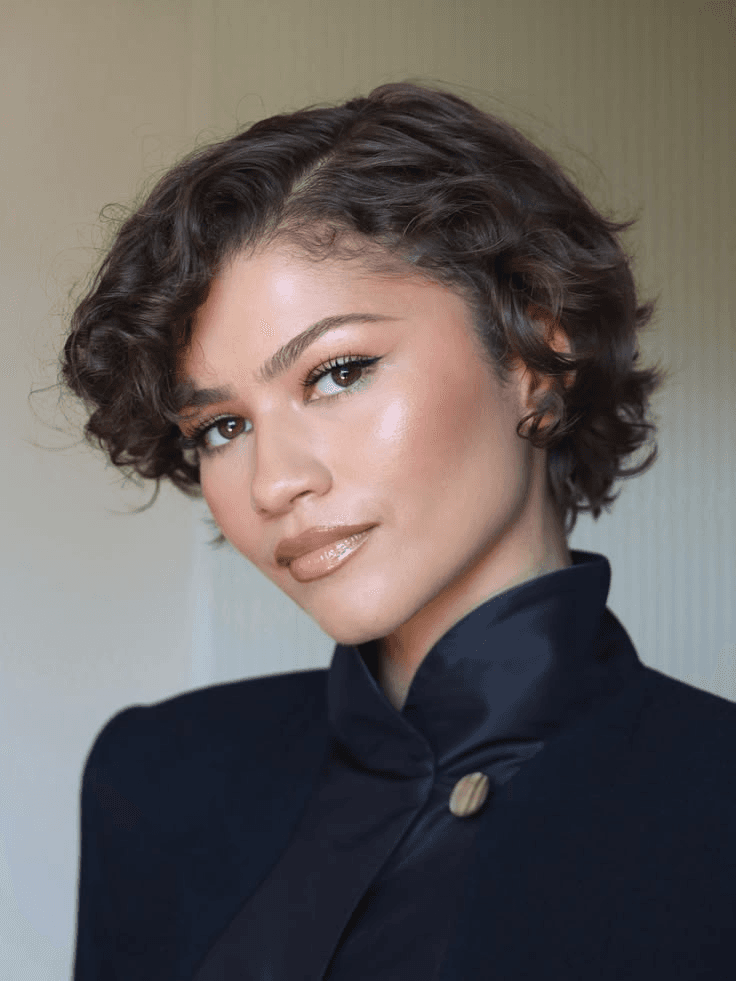
She played a goddess who guides Odysseus in a Nolan film shot entirely on IMAX 70mm, and a contemporary lead in a franchise instalment where roughly 95% of the third act was performed practically. Two registers, two weeks, one press cycle. And across that cycle she and her stylist Law Roach dressed the appearances as an extension of the films — Grecian draping for one, web-referencing looks for the other — which is a working method rather than a series of outfits.
Method dressing as a second performance
Method dressing is a second performance, and it is the one that reaches people who will never see the film.
The premise is that a press tour is not an obligation attached to a film but a separate piece of work with its own audience, most of whom encounter it as images rather than as interviews. Dressing each appearance in reference to the material turns that stream into a continuous argument about the film, delivered to people who are not watching trailers. Done well it produces weeks of coverage from events that would otherwise generate a paragraph each; done badly it looks like fancy dress, and the line between the two is precision of reference.
How to tell a campaign from a wardrobe
The test is whether the looks are legible to someone who has not seen the film.
A reference that only works for the audience already inside the property is decoration. A reference that communicates the register — antiquity, weight, drape for one film; contemporary, urban, kinetic for the other — tells a stranger what kind of thing this is before they have seen a frame. That is the actual job, and it is why the approach belongs to marketing rather than to fashion, whatever it looks like on a carpet.
Where this strategy stops working
The method has a ceiling and a specific failure mode.
The ceiling is that it works on films with strong visual identity and collapses on anything tonally ordinary — there is nothing to reference in a mid-budget contemporary drama, and attempting it produces looks that read as arbitrary. The failure mode is over-literalness: a costume rather than a reference. The difference is whether the look would function as clothing if the film did not exist, and the discipline is to stop one step short of illustration.
What the two tours looked like
Across the two tours the split was clear. The Odyssey appearances leaned on draping, weight of cloth and classical line — a register that reads as antiquity without becoming a toga. The Spider-Man appearances read contemporary and structural, with references that a viewer could catch or miss without the outfit failing. That last property is the mark of the method working: the reference is a reward for noticing rather than a requirement for understanding.
The case that the attention was proportionate
The reasonable objection is that the attention split was proportionate rather than unfair. Holland carries a franchise as its title character, played the son at the centre of the Nolan film's structure, and had more screen time in both. Athena and MJ are significant roles and neither is the lead. Coverage followed screen time, which is what coverage usually does.
That is largely correct on the film side and it does not explain the shape of the coverage, which was framed around a person and a relationship rather than around either performance. The honest reading is that both of them had an extraordinary summer, one of them was positioned as its protagonist by a press cycle that prefers a single subject, and the other ran a parallel campaign through images that generated its own coverage without needing the framing. Which of those is the better outcome depends entirely on what you are building.
Athena is a harder part than it looks
A goddess who intervenes in a mortal story has a structural problem: she cannot be in jeopardy, and jeopardy is what most screen tension is made of. The role has to generate interest from authority and intention rather than from risk.
It also has to work inside Nolan's format. Shot on IMAX 70mm with few takes and long unbroken scenes, there is no coverage to build a performance out of afterwards — stillness has to carry, which is a specific and unforgiving skill.
In a cast including Matt Damon, Anne Hathaway, Robert Pattinson and Charlize Theron, it is one of the parts most likely to be underestimated in reviews precisely because it does not struggle visibly.
MJ, ten years in
The other role is the opposite problem: a character she has played across a decade, in a film where the emotional premise is that Peter has lost almost everyone. A long-running supporting character in a franchise that has changed shape around her has to stay recognisable while the register shifts.
Continuity roles get very little critical attention because they appear to require less. In practice they require an actor to hold a consistent person across films made years apart by different directors with different tones, which is closer to a technical discipline than a creative one.
It is also the role that built the audience she now has. Franchise continuity is unglamorous and it is what makes the Nolan casting possible in the first place.
What Law Roach actually contributes
A stylist at this level is not choosing clothes; they are building a campaign with a narrative arc across dozens of appearances, negotiating with houses months ahead, and deciding what each event is for. Some appearances are designed to be photographed and some to be written about, and those are different briefs.
The partnership matters because method dressing only works with continuity. A single referential look is a costume; twenty of them across two films, with escalating specificity, is an argument that accumulates.
It is also why this is a craft story rather than a celebrity one. The work is planning, and the visible part is the last five per cent of it.
Why this belongs in a fashion conversation rather than a film one
Method dressing has quietly changed how brands think about talent. A house dressing an actor for a press tour used to be buying a photograph; it is now buying a position inside a narrative that runs for six weeks, and the value is different enough to change what gets negotiated.
The consequence is that the interesting deals now specify sequence rather than a single event. Which appearance, in what order, escalating toward what — that is a campaign structure, and it is the same structure a brand would use for a product launch.
For anyone building a brand, that is the transferable part. Attention accumulates when appearances are sequenced; it dissipates when they are simply frequent.
The attention economics of a shared summer
Two people in the same two films create a coverage problem: the story is more efficient with one protagonist, so the press cycle selects one. That selection is not usually a judgement about the work — it follows title billing, franchise ownership and whoever the existing narrative is already about.
The relationship framing accelerates it. Once two people are covered as a pair, the coverage optimises for the pairing rather than for either career, and the individual work becomes context.
The reason this is worth naming is that it is entirely predictable and therefore plannable. Running a parallel channel — images rather than interviews — is a rational response to a press cycle you know will consolidate around someone else.
What a second register buys an actor
The franchise supplies scale and the auteur film supplies range, and neither substitutes for the other. Zendaya has now done both in the same fortnight, which places her in the same narrow category as her co-star and very few others of that generation.
The Nolan credit is the one that changes what gets offered. Being cast by a director who does not need a box office number is a judgement about capability, and it moves an actor out of the category their franchise defines.
Whether that translates is answered the same way it is for anyone: by the next two roles and whether they resemble either of these.
The version of this that applies outside film
Strip the specifics and the pattern is ordinary. Two people do comparable work; the surrounding narrative can only carry one protagonist; it picks the one already central. Complaining about that is understandable and does nothing.
What works is building a channel the narrative does not control. In this case it was images with an internal logic, produced consistently enough that they generated their own coverage rather than depending on the film cycle's framing.
The general principle: when the main channel is allocated to someone else, do not compete inside it. Build one where the allocation is yours, and make it consistent enough that it accumulates.
Where her position actually sits now
Two of the five defining films of the year, a Nolan credit, a decade-long franchise role, and a press-tour method that other people are now copying. That is an unusually strong position and it is not the one the summer's coverage described.
The risk is the same one facing her co-star: overexposure. Continuous presence for a season converts an event into a background condition, and the correction is a gap that is uncomfortable to take.
The tell over the next year will be whether the next project is announced quickly or whether a pause is allowed to open. One extends the position; the other protects it.
What the houses are actually buying
A fashion house dressing an actor for a single premiere buys one photograph and a caption. Dressing them across a sequenced tour buys a position inside a story that runs for weeks, and the two are priced differently because they are different products.
That shift explains why these arrangements have moved from the publicity department toward marketing. A single red-carpet look is a placement; a six-week arc with escalating references is a campaign, and campaigns get planned against a calendar rather than an event.
It also raises the stakes on coherence. One inconsistent look inside a sequenced tour is more damaging than a mediocre one inside a scattered tour, because the sequence is the product.
The theatrical argument underneath both films
Both of her 2026 films were bets on people leaving the house: an IMAX 70mm epic that is materially worse at home, and a franchise instalment built on practically staged action best seen large. Both worked, in a period when that was not a safe assumption.
That matters to the press-tour question because images are how a theatrical argument reaches people who have stopped going. A trailer reaches an audience already inside the funnel; a photograph circulating on a platform reaches one that is not.
Read that way the method dressing was not decoration around the films. It was part of the same argument the films were making, delivered through a channel the films could not use themselves.
Why this is the harder position to hold long term
A franchise lead has a defined asset — the character — that generates offers regardless of anything else. A supporting player in the same franchise has no such floor, and the position has to be rebuilt with each cycle.
That makes the Nolan credit more load-bearing here than it is for a title character. It is the piece of evidence that the career is not dependent on one property, and there is less else doing that work.
The corollary is that the next choice carries more weight rather than less. For someone whose position is built rather than owned, a wrong register costs more, and a right one compounds faster.
What to take from it if you build a brand
If the main channel belongs to someone else, build a parallel one and sequence it.
Identify which channel the surrounding narrative controls — in this case interviews and framing — and stop competing there. Choose a second channel where you set the terms, here images with a consistent internal reference. Sequence the appearances so they escalate rather than repeat, because accumulation is what produces coverage. And make each one legible to someone with no prior context, since the audience that matters is the one that has not seen the thing yet.
Judge the method by the strangers it reached
The measure of a press-tour campaign is not how much coverage it generated but how much of that coverage explained the film to people who had not encountered it. A look that circulates among an existing fandom has done nothing; one that tells a stranger what register a film belongs to has done the job. That distinction is visible in where the images travelled rather than in how many times they were reposted.
Reassess after the next project is announced, since the method only sustains where the material has a visual identity to reference. A film without one requires a different approach entirely, and continuing to apply this one is how the technique tips into costume.
Editorial conclusion
Two of the year's defining films, fourteen days apart, and a season named after someone else who did the same thing. The response was not to argue about billing but to run a parallel campaign through images, with enough internal consistency that it produced coverage on its own terms. That is a better answer than complaining and a more useful one to study, because the situation — comparable work, a narrative that can only hold one protagonist — is not remotely unique to film.
Practical checklist
- First move — If the main channel belongs to someone else, build a parallel one and sequence it.
- What to measure — The test is whether the looks are legible to someone who has not seen the film.
- Failure mode to watch — The method has a ceiling and a specific failure mode.
- Assign a visible owner and a review date.
- Separate evidence from interpretation.
- Capture a baseline before changing the process.
Questions and answers
What films was Zendaya in during 2026?
Two of the five that defined the year: Athena in Christopher Nolan's The Odyssey and MJ in Spider-Man: Brand New Day, released fourteen days apart — the same pair as Tom Holland.
What is method dressing?
Dressing press appearances in reference to the film being promoted, so the tour becomes a continuous argument about the material aimed at people who encounter it as images rather than trailers. Zendaya works with stylist Law Roach on it.
How do you tell method dressing from a costume?
Whether the look would function as clothing if the film did not exist. A reference rewards noticing; a costume requires it. The discipline is stopping one step short of illustration.
Why did the coverage focus on Tom Holland?
Press cycles are more efficient with one protagonist, and the selection follows title billing and franchise ownership rather than a judgement about performances. The couple framing accelerated it further.
Is Athena a difficult role?
Structurally, yes. A goddess cannot be in jeopardy, and jeopardy is what most screen tension is made of, so interest has to come from authority and intention. On IMAX 70mm with few takes, stillness has to carry it.