
Answer in brief
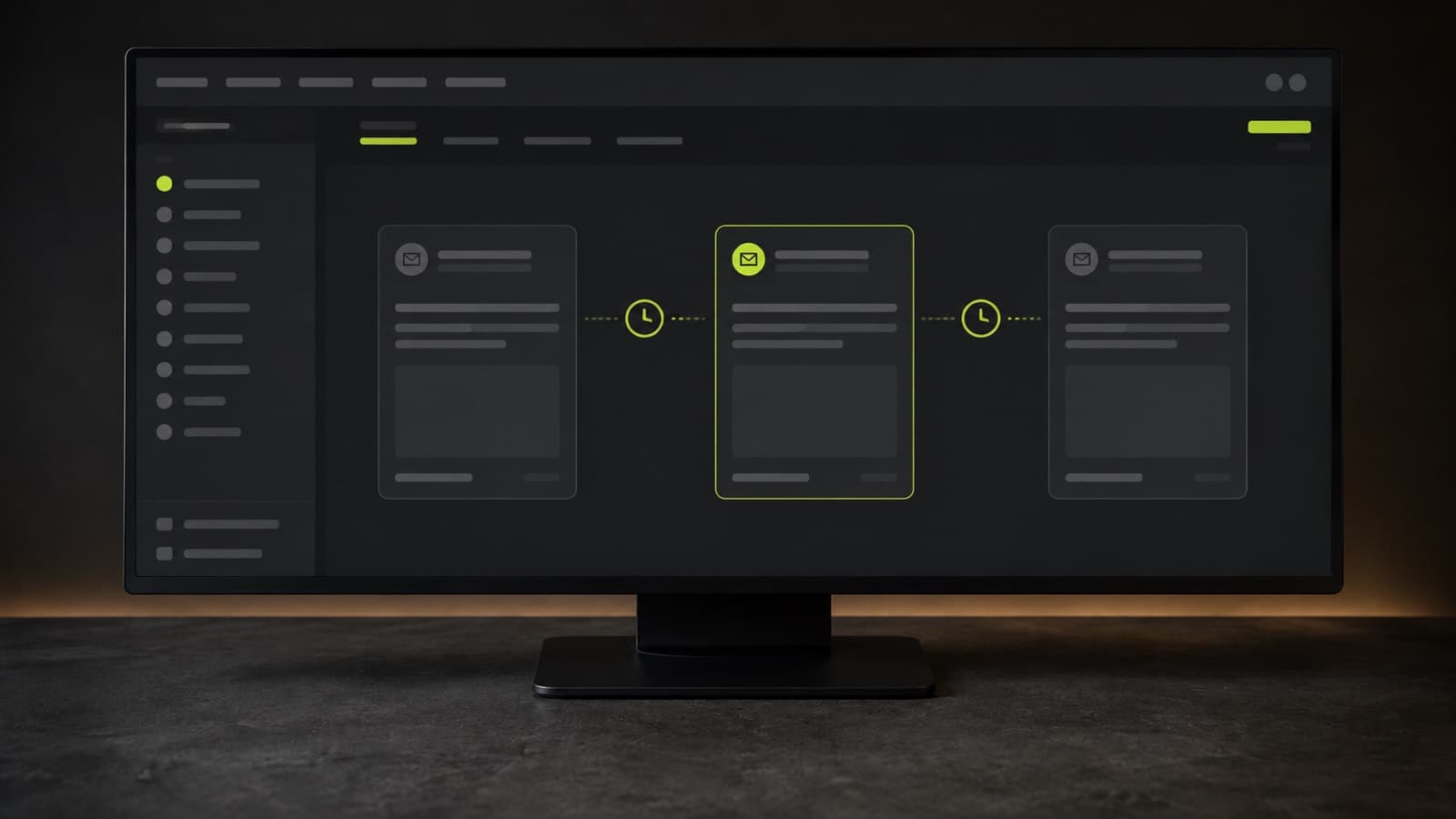
Email lifecycle marketing gives teams dealing with lifecycle states, reliable triggers, consent, message utility and ownership of exceptional customer journeys a practical buyer guide.
Verified facts
- Source review
- Sources were checked on 29 August 2026.
- Reader need
- email automation for a service business lead funnel
When a smaller route is more responsible — Email lifecycle marketing: Build useful messages for the moments between first…
The responsible alternative to full Email lifecycle marketing is a documented manual follow-up playbook when volume does not justify automation. It should have its own output, review date and decision it is allowed to answer.
A smaller route is not a discounted imitation of the full service. It is valid when it removes one named uncertainty while preserving the option to commission Core email sequences and Measurement plan later. The alternatives view protects the buyer from commissioning a complete system to answer one narrow uncertainty.
Treat When a smaller route is more responsible as a decision file, not a presentation chapter. For Email lifecycle marketing, keep the strongest supporting example and the strongest contrary example together, with dates and owners. Explain how each changes Lifecycle map, Core email sequences or Measurement plan. If contrary evidence changes nothing, the route is being defended rather than tested against lifecycle states, reliable triggers, consent, message utility and ownership of exceptional customer journeys.
Translate the review into one next action that has an owner, a deadline and a visible completion signal. The action may update Lifecycle map, challenge Core email sequences, prepare Measurement plan or validate a documented manual follow-up playbook when volume does not justify automation; it must not be a vague promise to improve later. The completion signal should demonstrate a lifecycle map, useful sequence copy, trigger and suppression rules, test cases and a measurement owner in the environment where the result will actually be used. This record closes the When a smaller route is more responsible checkpoint for Email lifecycle marketing.
The decision hiding behind the request — Email lifecycle marketing: Email lifecycle marketing aligns lifecycle states,…
A request for Email lifecycle marketing often arrives as a list of activities. The real commercial decision is whether the team can align lifecycle states, reliable triggers, consent, message utility and ownership of exceptional customer journeys around one customer situation that matters now.
Tests must cover repeat purchase, unsubscribe, changed status, late data and a customer entering two routes at once. Start with a recent case and attach Lifecycle map to it; otherwise the brief can sound complete while leaving the buying problem unresolved.
Before closing the The decision hiding behind the request review for Email lifecycle marketing, let a person outside the work reconstruct the reasoning from Lifecycle map. They should be able to identify the customer condition, the constraint, the rejected alternative and the owner of Core email sequences. Any explanation available only in a meeting is a handover risk, particularly when the real exposure is that messages are scheduled by arbitrary delays while customer status, suppression and duplicate records remain unreliable.
Add a stop rule before budget or production expands. The rule should identify the evidence threshold, the person authorised to pause and the safe state of Measurement plan. If the threshold is missed, compare a documented manual follow-up playbook when volume does not justify automation with a revised boundary instead of protecting sunk effort. This keeps Email lifecycle marketing accountable to a lifecycle map, useful sequence copy, trigger and suppression rules, test cases and a measurement owner, not to the amount already spent. This record closes the The decision hiding behind the request checkpoint for Email lifecycle marketing.
Define the useful decision first — Email lifecycle marketing: The material risk is that messages are scheduled by…
Before choosing channels or production volume, write the decision that Email lifecycle marketing must improve. It should be specific enough for Core email sequences to show a changed route rather than more activity.
A decision-ready proposal explains what the buyer will do differently when Lifecycle map, Core email sequences and Measurement plan agree. It also records which adjacent request is intentionally outside the first engagement.
At this checkpoint in Email lifecycle marketing, ask the team to write the choice, the person making it and the consequence of waiting. Put a dated example beside Lifecycle map, record who collected it and note what was unavailable. Then compare that record with lifecycle states, reliable triggers, consent, message utility and ownership of exceptional customer journeys. A claim that cannot be traced to a customer, channel or operating event remains an assumption and must not quietly set the boundary for Core email sequences.
Finish the section with a written decision: continue, narrow the boundary, choose a documented manual follow-up playbook when volume does not justify automation or stop. Name the evidence that would reverse it and the date for that review. Measurement plan should preserve the decision, the unresolved questions and the person responsible for operating it. That is how a lifecycle map, useful sequence copy, trigger and suppression rules, test cases and a measurement owner becomes testable after the project team leaves. This record closes the Define the useful decision first checkpoint for Email lifecycle marketing.
Evidence worth bringing to the table — Email lifecycle marketing: A complete handover proves a lifecycle map, useful…
Useful evidence for Email lifecycle marketing is close to the decision: customer language, campaign or sales traces, existing assets and the operating constraint behind them. Lifecycle map should preserve the source, not only its interpretation.
Evidence must be allowed to weaken the preferred idea. If a source contradicts lifecycle states, reliable triggers, consent, message utility and ownership of exceptional customer journeys, the team records the disagreement and decides whether to narrow, reframe or stop.
Use a real case to test the Evidence worth bringing to the table part of Email lifecycle marketing. The working record should contain the source, the interpretation, the objection and the decision they produced. Link those four items to Lifecycle map and Core email sequences; if one is missing, the team cannot distinguish evidence from preference. This discipline matters especially when messages are scheduled by arbitrary delays while customer status, suppression and duplicate records remain unreliable.
The buyer should leave this checkpoint knowing what has been approved, what has not and who acts next. Record the acceptance test for Core email sequences, the operating owner of Measurement plan and a reason to reject the current route. If the team cannot write those three facts, Email lifecycle marketing is not ready to move from Evidence worth bringing to the table into production. This record closes the Evidence worth bringing to the table checkpoint for Email lifecycle marketing.
A boundary that can be quoted and accepted — Email lifecycle marketing: Email lifecycle marketing gives teams dealing with…
A quotable boundary names the input condition for Lifecycle map, the decision carried by Core email sequences and the acceptance record stored in Measurement plan. Dependencies are not hidden inside a broad promise.
The boundary also states when a documented manual follow-up playbook when volume does not justify automation is enough. That clause protects the buyer from paying for a complete operating layer when a smaller decision would remove the immediate uncertainty.
Treat A boundary that can be quoted and accepted as a decision file, not a presentation chapter. For Email lifecycle marketing, keep the strongest supporting example and the strongest contrary example together, with dates and owners. Explain how each changes Lifecycle map, Core email sequences or Measurement plan. If contrary evidence changes nothing, the route is being defended rather than tested against lifecycle states, reliable triggers, consent, message utility and ownership of exceptional customer journeys.
Translate the review into one next action that has an owner, a deadline and a visible completion signal. The action may update Lifecycle map, challenge Core email sequences, prepare Measurement plan or validate a documented manual follow-up playbook when volume does not justify automation; it must not be a vague promise to improve later. The completion signal should demonstrate a lifecycle map, useful sequence copy, trigger and suppression rules, test cases and a measurement owner in the environment where the result will actually be used. This record closes the A boundary that can be quoted and accepted checkpoint for Email lifecycle marketing.
The failure to rehearse before approval — Email lifecycle marketing: Email lifecycle marketing gives teams dealing with…
The material failure to rehearse is that messages are scheduled by arbitrary delays while customer status, suppression and duplicate records remain unreliable. The review should recreate the conditions that make this likely and show who notices before budget, trust or customer time is lost.
A risk statement becomes useful only when it changes Core email sequences, the approval rule or the operating owner. If nothing changes, it is a disclaimer rather than a control.
Before closing the The failure to rehearse before approval review for Email lifecycle marketing, let a person outside the work reconstruct the reasoning from Lifecycle map. They should be able to identify the customer condition, the constraint, the rejected alternative and the owner of Core email sequences. Any explanation available only in a meeting is a handover risk, particularly when the real exposure is that messages are scheduled by arbitrary delays while customer status, suppression and duplicate records remain unreliable.
Add a stop rule before budget or production expands. The rule should identify the evidence threshold, the person authorised to pause and the safe state of Measurement plan. If the threshold is missed, compare a documented manual follow-up playbook when volume does not justify automation with a revised boundary instead of protecting sunk effort. This keeps Email lifecycle marketing accountable to a lifecycle map, useful sequence copy, trigger and suppression rules, test cases and a measurement owner, not to the amount already spent. This record closes the The failure to rehearse before approval checkpoint for Email lifecycle marketing.
What a buyer can actually accept — Email lifecycle marketing: Build useful messages for the moments between first…
Acceptance for Email lifecycle marketing is not agreement that the work looks thoughtful. It is the ability to verify a lifecycle map, useful sequence copy, trigger and suppression rules, test cases and a measurement owner against the customer and operating evidence agreed at the start.
The acceptance record in Measurement plan names the evidence, approver, exclusions and unresolved questions. A future reviewer should understand why the decision was made without reconstructing the entire project.
At this checkpoint in Email lifecycle marketing, ask the team to turn approval into evidence a new reviewer can reproduce without oral history. Put a dated example beside Lifecycle map, record who collected it and note what was unavailable. Then compare that record with lifecycle states, reliable triggers, consent, message utility and ownership of exceptional customer journeys. A claim that cannot be traced to a customer, channel or operating event remains an assumption and must not quietly set the boundary for Core email sequences.
Finish the section with a written decision: continue, narrow the boundary, choose a documented manual follow-up playbook when volume does not justify automation or stop. Name the evidence that would reverse it and the date for that review. Measurement plan should preserve the decision, the unresolved questions and the person responsible for operating it. That is how a lifecycle map, useful sequence copy, trigger and suppression rules, test cases and a measurement owner becomes testable after the project team leaves. This record closes the What a buyer can actually accept checkpoint for Email lifecycle marketing.
Practical checklist
- Email lifecycle marketing: bring one current customer, campaign or sales case in which lifecycle states, reliable triggers, consent, message utility and ownership of exceptional customer journeys is visible.
- Email lifecycle marketing: attach source material to Lifecycle map and name the person allowed to interpret it.
- Email lifecycle marketing: define the decision carried by Core email sequences, including one reason to reject the proposed route.
- Email lifecycle marketing: rehearse the condition in which messages are scheduled by arbitrary delays while customer status, suppression and duplicate records remain unreliable and record who notices it.
- Email lifecycle marketing: compare the full commission with a documented manual follow-up playbook when volume does not justify automation before fixing the boundary.
- Email lifecycle marketing: accept Measurement plan only when it shows a lifecycle map, useful sequence copy, trigger and suppression rules, test cases and a measurement owner.
Questions and answers
Which signal shows that Email lifecycle marketing is being framed as activity rather than a decision?
The warning appears when nobody can state how lifecycle states, reliable triggers, consent, message utility and ownership of exceptional customer journeys changes a buyer or operating choice. More deliverables do not repair that gap; a named decision and one real case do.
What evidence should be allowed to change the direction for “Email lifecycle marketing: when a narrower alternative is the better decision”?
Customer language, sales or campaign traces, current assets and operating constraints should be able to contradict the preferred route. Tests must cover repeat purchase, unsubscribe, changed status, late data and a customer entering two routes at once.
What warning deserves a pause before commissioning the full service for “Email lifecycle marketing: when a narrower alternative is the better decision”?
Pause when messages are scheduled by arbitrary delays while customer status, suppression and duplicate records remain unreliable. Resolve that condition or make it an explicit controlled risk before asking Core email sequences to carry the decision.
What can a limited pilot prove without pretending to deliver everything for “Email lifecycle marketing: when a narrower alternative is the better decision”?
A limited pilot can test whether a documented manual follow-up playbook when volume does not justify automation removes the named uncertainty. It should end with a decision record, not an open-ended promise to scale.
What should the first operating review examine for “Email lifecycle marketing: when a narrower alternative is the better decision”?
Review whether Measurement plan demonstrates a lifecycle map, useful sequence copy, trigger and suppression rules, test cases and a measurement owner. Then decide whether to continue, change the boundary or stop while the evidence is still current.