
Answer in brief
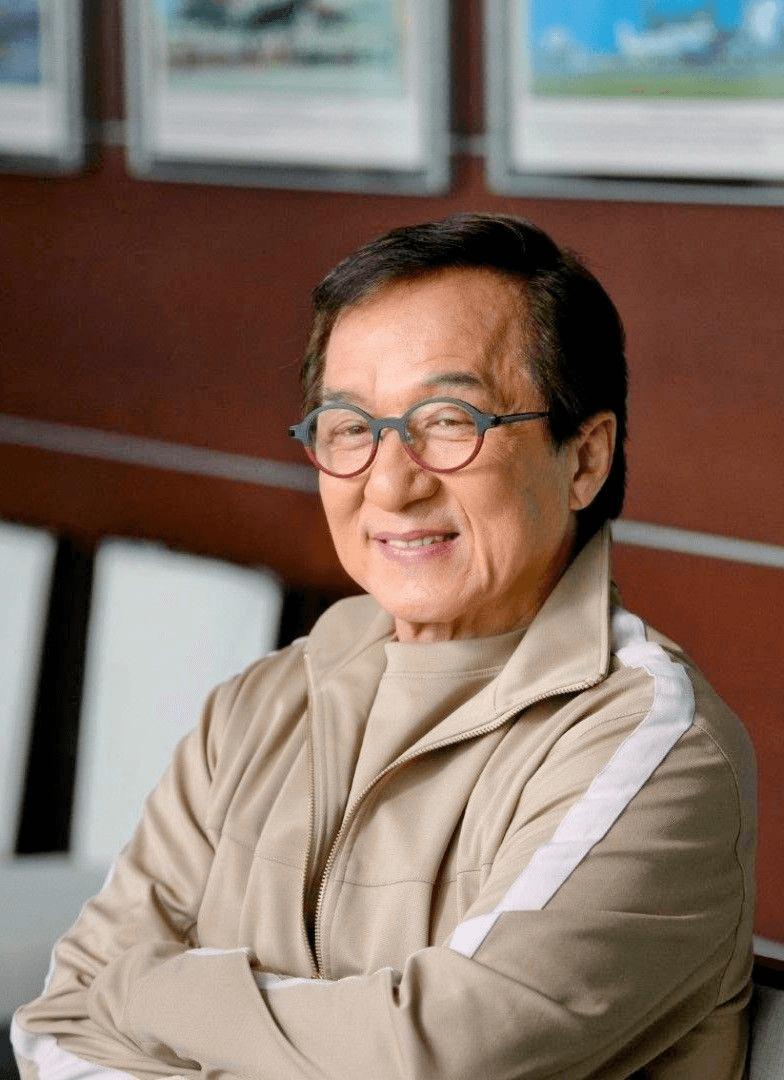
Jackie Chan has said his stunt team worked on Spider-Man: Brand New Day and that he visited the London set to support them. Destin Daniel Cretton has said the Jackie Chan Stunt Team did not work on the film, and that the stunts were coordinated by Peng Zhang. Both statements can be true at once, and understanding how is a short course in the way action films actually get credited.
Two people, two answers, one film
Jackie Chan has said his stunt team worked on Spider-Man: Brand New Day and that he visited the London set to support them. Destin Daniel Cretton has said the Jackie Chan Stunt Team did not work on the film, and that the stunts were coordinated by Peng Zhang. Both statements can be true at once, and understanding how is a short course in the way action films actually get credited.
The film's action was widely praised, and the praise attached itself to a name almost immediately. Coverage through July and August described the Jackie Chan Stunt Team as the secret behind the fight scenes, and the attribution travelled faster than anyone's ability to check it. That is worth stating plainly, because this publication repeated the claim as established fact before the director's denial surfaced.
What each side actually said
Chan's account is specific: he says his team was involved in the stunt design and execution, that he visited the set in London, and that he acted as action director for the team while they were there. He also praised Holland, saying he had heard the actor paid homage to his films and performed many of his own stunts. Cretton's account is equally specific and points elsewhere: the Jackie Chan Stunt Team did not work on the movie, and the stunts were handled by Peng Zhang, who trained under the late Brad Allan.
How stunt credit is really assigned
Stunt credit is assigned by contract and lineage is assigned by training, and the two frequently describe the same people without matching.
Brad Allan was a member of the Jackie Chan Stunt Team before becoming one of the most respected stunt coordinators working in English-language film. Peng Zhang trained under him. So a coordinator with no contractual relationship to Chan's team can nonetheless be two steps from it in method, vocabulary and approach — and a viewer watching the finished film will correctly identify the grammar as belonging to that school. Chan may be describing a lineage and a visit; Cretton may be describing a payroll. Neither description is false and neither is complete.
How to tell lineage from involvement
Separate three questions that are usually collapsed into one: who trained whom, who was on set, and who was contracted.
Training is a matter of biography and is rarely disputed. Presence on set is a matter of record and easy to verify, and a visit is not the same as employment. Contracting is what determines the credit, and it is the only one of the three that appears on a call sheet. Most public disputes about stunt attribution are two people answering different questions honestly, and almost all of them dissolve once the three are pulled apart.
Why this kind of dispute keeps happening
The reason this keeps happening is that stunt work has never had a credit structure adequate to how it is made.
Action sequences are collaborative in a way that resists a single line of credit: a coordinator designs, a team executes, performers contribute, a second unit director shoots, and the editor decides what survives. There is no equivalent of a screenplay credit arbitration to settle who did what. In the absence of one, the most recognisable name available tends to absorb the attribution, which is unfair to the people actually on the floor and understandably irritating to the director who hired them.
What is visible in the film itself
What is not disputed is what reached the screen. Roughly 95% of the third act was performed practically by Holland's account; web-swinging was rigged on wires and cranes and photographed rather than animated; pyrotechnics were detonated live, including an opening sequence in Glasgow swinging behind a moving truck. The choreography shows long takes, readable geography and gags built from objects in the environment — the grammar of that school, whoever was employed to produce it.
The case that this is trivial
The reasonable objection is that this is a trivial disagreement about publicity, of interest to nobody outside the industry. A film's action is good or it is not; who staged it is a matter for the credits, and treating a mild contradiction between two interviews as a story is the kind of thing that fills entertainment coverage precisely because nothing is at stake.
That holds for the gossip and fails for the underlying issue. Stunt performers are the only major craft in film with no Academy Award and, historically, weak credit protection, and attribution drifting toward famous names is one mechanism by which that persists. Peng Zhang coordinated a film that took $1.72 billion, and the widely circulated version of events credits someone else's team. Whether or not Chan intended that outcome, it is the outcome, and it is worth being precise about.
Who Brad Allan was, and why the lineage is real
Brad Allan was an Australian martial artist who became a member of the Jackie Chan Stunt Team, one of very few non-Chinese performers to do so, and later one of the most sought-after stunt coordinators in English-language action cinema before his death in 2021.
That career is the bridge. Through Allan, Chan's method — the emphasis on clarity over impact, on geography the viewer can follow, on comic timing inside violence — entered mainstream English-language filmmaking directly rather than by imitation.
So when Peng Zhang, who trained under Allan, coordinates a film and the result looks like a Jackie Chan film, that is not coincidence and it is not appropriation. It is a school working as schools do, which is exactly why the attribution confusion is so easy to fall into.
What Chan's method actually is
It is a set of specific rules rather than a style. Show the whole body in frame so the audience can see nobody is being substituted. Hold shots long enough that the audience can follow cause and effect. Build the fight out of whatever is in the room — a ladder, a chair, a doorway — so the space is a participant.
And crucially, let the hero be hurt and inconvenienced. Chan's fights are funny because they are difficult, and they are legible because the difficulty is physical rather than edited.
Every one of those choices is visible in Brand New Day's street-level sequences, which is why the audience read the connection instantly. The grammar is recognisable even when the personnel are not.
Why a visit is not a credit, and why it still matters
Chan says he went to the London set and acted as action director for the team while he was there. Set visits by senior figures are common, sometimes ceremonial and sometimes substantive, and they occupy an awkward space in credit terms: real influence, no contract.
That ambiguity is not unique to stunts. It appears wherever expertise is transmitted informally — a consultation, a note, an afternoon on set — and formal credit systems have no field for it.
The honest way to describe it is what happened: a visit, an involvement, and a coordinator of record who was someone else. Compressing that into one name is what produced the disagreement.
What the film industry does not do for stunts
There is no competitive Academy Award for stunt work, despite decades of campaigning. There is no arbitration body determining stunt credit as the writers' guild does for screenplays. Coordinators frequently appear well down the crawl, and performers often not at all in publicity.
The consequence is structural rather than malicious. When there is no authoritative record of who did what, the public record is written by whoever gives the most quotable interview, and famous names quote better than working coordinators.
This dispute is a small instance of that. It is also a useful one, because both parties spoke publicly and quickly, which is rarer than it should be.
How to read a credit dispute in any field
The template generalises well beyond film. When two credible people describe the same project differently, the usual cause is that they are answering different questions — who taught this, who was present, who was engaged — and each is answering theirs accurately.
The productive move is not to decide who is lying but to identify which question each person answered. That resolves most professional attribution disputes and reveals the ones that are genuinely contested, which are far rarer.
It also indicates where the credit system is weak. A field that regularly produces this kind of confusion has a documentation problem, not a character problem.
Chan at this stage of his career
Chan has spent decades trying to institutionalise his method — through the stunt team as a training structure, through advocacy for stunt recognition, and through work as an action director rather than only a performer. The fact that a coordinator two generations down the line is staging a $1.72 billion film is the clearest evidence that the institutionalisation worked.
It also explains the enthusiasm in his account. Someone who has spent a career trying to make a school outlive him has an obvious interest in being associated with its successes, and a natural tendency to describe them as continuous with his own work.
That is not a criticism. It is arguably the correct way to think about a lineage, and it is the reason the confusion is sympathetic rather than cynical.
What this publication got wrong
We reported the Jackie Chan Stunt Team's involvement as established fact in earlier coverage of the film and of Tom Holland's year, in English, Russian and Spanish. That was based on widely circulated reporting and it was not adequately checked against the director's account.
Those passages have been corrected to describe what is actually supported: Peng Zhang coordinated the action, he trained under Brad Allan of the Jackie Chan Stunt Team, and Chan and Cretton disagree about direct involvement.
Naming the correction here rather than making it silently is the point. An attribution error in a piece about attribution errors would be an unusually poor outcome.
The economics of hiring a school rather than a name
A production choosing action personnel is buying a method, and methods live in people who trained together. Hiring a coordinator from a known lineage is more reliable than hiring a famous one, because the lineage predicts how the team will work under schedule pressure.
That is the practical reason a $1.72 billion film ended up with a coordinator most of its audience cannot name. Studios at this level optimise for execution risk, and a team that has worked together and shares a vocabulary reduces it more than a marquee credit does.
It also explains why the confusion is so persistent. The audience recognises the school and reaches for the founder's name, because the founder is the only member of the school it has heard of.
What Holland's involvement changes about the credit question
Holland performing roughly 95% of the third act himself complicates attribution further, because a performer doing his own work is contributing choreography decisions in practice whether or not he is credited for them.
Chan's own comment points at this: he said he had heard Holland pays homage to his films and performs many of his own stunts. That is a remark about a performer, not about a team, and it may be the part of Chan's account that travelled furthest from what he meant.
The general point is that in practically-shot action the boundary between performance and choreography is genuinely blurred. Credit systems drawn for a different production method struggle with that, and this dispute is one symptom.
How to check a claim like this yourself
Three sources settle most of it and all are public. End credits list the stunt coordinator and the second unit, which answers the contracting question definitively. Trade interviews with the director answer the production question. Biographies and prior credits answer the lineage question.
What no source answers is influence, which is the category Chan's set visit belongs to. Anyone insisting on a definitive answer there is asking a question the record cannot settle.
That is the useful discipline generally: know which of your questions the available evidence can close, and stop treating the remainder as though someone is hiding something.
Reading the next credit dispute
When a credit is disputed, ask which of the three questions each person answered before deciding anyone is wrong.
Take the two statements and separate them: training, presence, contract. Establish which is documented — call sheets and credits settle contracting, photographs and interviews settle presence, biography settles training. Then check whether the disagreement survives that separation. In this case it largely does not, which is why the accurate description is longer than a headline and considerably more interesting.
Watch what the coordinator does next
The most informative follow-up is not another statement from either party but Peng Zhang's next few credits. A coordinator who staged the action for a film of this scale should be visible on the next tier of productions, and whether that happens indicates whether the industry credited him in practice regardless of what circulated in the press.
Revisit whenever stunt recognition is formally debated, which recurs every few years. The structural argument in this dispute — that the absence of an authoritative credit record lets attribution drift toward famous names — is the same argument being made in those campaigns, and this is a clean recent example of it.
Editorial conclusion
Both men are probably describing something real. Chan is describing a lineage he built and a visit he made; Cretton is describing who was hired. The film's action carries the grammar of a school that Chan created and Brad Allan carried into English-language cinema, staged by a coordinator Allan trained. That is a more interesting story than either headline, and it is only confusing because film has never built a way to credit the thing that actually happened.
Practical checklist
- First move — When a credit is disputed, ask which of the three questions each person answered before deciding anyone is wrong.
- What to measure — Separate three questions that are usually collapsed into one: who trained whom, who was on set, and who was contracted.
- Failure mode to watch — The reason this keeps happening is that stunt work has never had a credit structure adequate to how it is made.
- Assign a visible owner and a review date.
- Separate evidence from interpretation.
- Capture a baseline before changing the process.
Questions and answers
Did Jackie Chan's stunt team work on Spider-Man: Brand New Day?
It is disputed. Chan says his team was involved and that he visited the London set; director Destin Daniel Cretton has said the Jackie Chan Stunt Team did not work on the film and that the stunts were coordinated by Peng Zhang.
Who coordinated the stunts?
Peng Zhang, according to the director. Zhang trained under the late Brad Allan, who was himself a member of the Jackie Chan Stunt Team before becoming a leading coordinator in English-language film.
Can both accounts be true?
Largely, yes. Chan may be describing lineage and a set visit; Cretton may be describing who was contracted. Training, presence and employment are three different questions that public discussion usually collapses into one.
Why does the action look like a Jackie Chan film?
Because it is built on his method — whole bodies in frame, shots held long enough to follow cause and effect, fights assembled from objects in the room, and a hero who is visibly inconvenienced. That grammar reached the film through the Allan lineage.
Why do stunt credit disputes keep happening?
Stunt work has no competitive Academy Award and no arbitration body for credit. Without an authoritative record, the public version is written by whoever gives the most quotable interview, and recognisable names absorb attribution.