
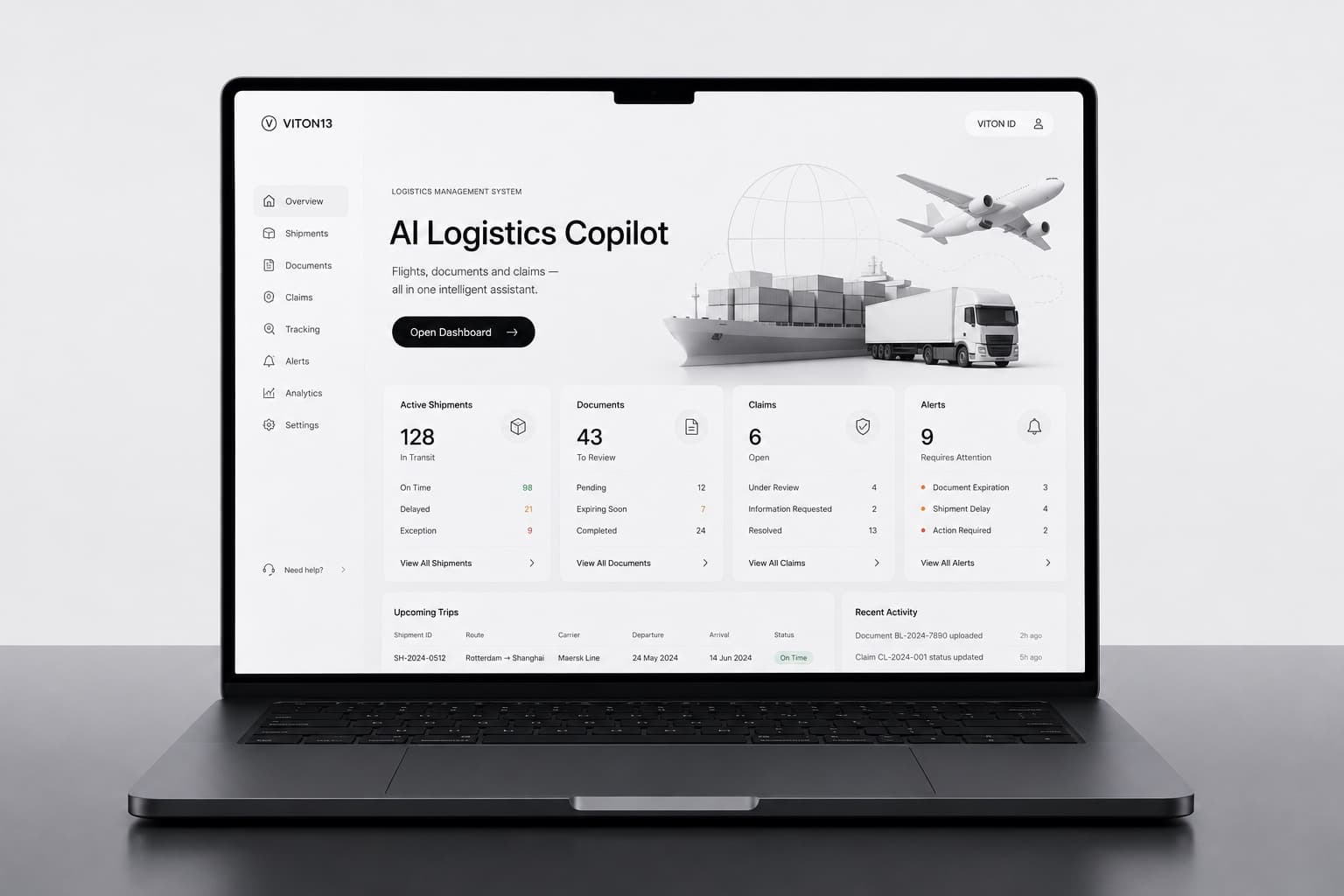
Answer in brief
AI Logistics Copilot соединяет планирование рейса, документы, статусы, исключения и претензионную работу в одном контуре для небольшого перевозчика.
Small Carrier Manages Trip Through Dozens of Manual Confirmations
Orders arrive via email or messenger, dispatchers manually transfer addresses and terms, drivers receive details by phone, clients ask for status updates, and signed documents return as photos. Each participant contributes useful work, but information is repeatedly rewritten. While trip volumes are low, an experienced dispatcher sustains the process. As volumes grow, this person becomes a bottleneck and the only one understanding the full picture.
Automation for a small transport company doesn't need to start with costly network-wide optimization. The highest initial value is often connecting order, trip, status, and document data. AI Logistics Copilot accepts disparate data, forms a unified card, tracks exceptions, and prepares communications. Humans confirm assignments, commercial decisions, and disputed situations.
The product doesn’t promise an ideal route amid traffic, borders, weather, and human factors. It makes decisions verifiable: where an address came from, which version of the order applies, which event confirmed arrival, and what document is missing. This discipline reduces calls and helps the team detect risk earlier without creating false impressions of full control.
VITON13 designs Logistics Copilot for small motor and multimodal operators, freight forwarders, and companies with own delivery. Scale is configurable: one regular route, specific client, or cargo type. The pilot must prove operational effect before adding complex forecasts and automatic actions.
Orders Become Structured Trips Without Re-Entry
The system extracts sender, recipient, addresses, time windows, cargo, weight, volume, temperature requirements, special instructions, and cost from emails or documents. The original remains saved nearby. If addresses are incomplete, units differ, or two files show different dates, AI Logistics Copilot creates a query to the dispatcher. Model confidence must never silently replace required fields.
After checks, data form trips and assignments to participants. Drivers receive only necessary information and the latest version; clients get order acceptance confirmation; accounting sees commercial linkage. Changes to address or time bear author and timestamp; affected parties are notified after confirmation. This reduces the risk that important clarifications remain in one dispatcher’s personal chat.
Client, location, vehicle, and driver directories require stable identifiers. One warehouse may have multiple notations; similar company names may refer to different legal entities. The system suggests matches, but operators confirm them. Cleaning these links is part of the pilot and yields benefits even before smart routing implementation.
Templates help with repeated routes but aren’t copied blindly. Current windows, requirements, and rates are compared with past versions. The system highlights changes so that habitual trips don’t proceed under outdated conditions. This automation maintains speed without turning routine into blind repetition.
Planning Considers Driver, Vehicle, Cargo, and Contract Constraints
Assignments start from mandatory constraints: vehicle type, load capacity, permits, work regime, availability, and geography. Then soft factors are evaluated: mileage, familiarity with points, next trip, and likelihood of timely completion. The system shows allowable options and explains why a particular one was prioritized.
Dispatchers retain the right to override recommendations. They might know of repairs, local restrictions, or agreements not yet in directories. Reasons are recorded to improve data. If staff routinely bypass a rule, the project reviews it instead of blaming resistance to automation.
For consolidated and multimodal shipments, dependencies matter. A delay in the first leg changes reload times, slots, and documents. AI Logistics Copilot links events and shows impacted obligations. It suggests scenarios, but contract changes or transport mode adjustments must be confirmed by responsible staff.
Plans aren't final upon sending to drivers. The system checks readiness: documents received, window confirmed, contacts known, transport conditions met. Any missing item raises a warning before departure. This simple control often prevents more problems than complex algorithms optimizing yet incomplete data.
Delivery Status Should Rely on Events, Not Assumptions
Client statuses are predefined: transport assigned, arrived, loaded, en route, arrived at destination, unloaded, documents received. Each has a source—a driver’s mark, geo-zone, document, telematics event, or dispatcher confirmation. The system does not mark 'en route' just because scheduled departure time arrived.
ETA is expressed as a range with a confidence level. Route history, current position, and traffic assist forecasting, but toll queues and weather can affect the outcome. If uncertainty grows, clients get honest updates with next contact timing. False precision suits interfaces but destroys trust.
Drivers interact via short actions or voice without filling complicated forms while driving. Safe scenarios feature work during stops or automated events where allowed. Recognized messages prepare for saving but critical info is driver-confirmed.
Dispatchers see exceptions, not streams of normal events. If the trip proceeds as planned, the system updates clients per rules. If discrepancies, delays, or communications losses occur, tasks escalate to humans. This model returns team attention where decisions are needed instead of routine manual status messages when all is well.
Documents Form a Digital Chain from Order to Payment
Transport documents link to specific trips and order versions. AI Logistics Copilot recognizes numbers, participants, dates, and seals, compares them against the trip card, and highlights discrepancies. Photos remain originals, structured fields fuel search and control. Poor image quality or sealed stamps generate tasks rather than automatic acceptance.
Completeness checks cover route and client specifics. One trip requires waybill and delivery confirmation; another may need temperature reports, acts, or extra permits. The system pre-shows lists to drivers and dispatchers, then reminds of missing items after unloading. This reduces payment delays since packages assemble during the process, not weeks later from memory.
UNECE defines eCMR as the electronic equivalent to a road waybill and develops structured messages for participant interaction. Specific adoption depends on countries and solutions, but the direction is clear: documents become sets of agreed data, accessible to stakeholders and authorities. Logistics Copilot prepares for this via stable entities and change logs.
Legal effect does not come from image recognition. Companies determine acceptable signatures, storage, access, and originals per jurisdiction. AI assists filling, verification, and search but does not declare legitimacy without established procedures.
Exceptions Trigger Resolution Scenarios Before Becoming Claims
Delay, downtime, damage, cargo mismatch, or rejection each follow different paths. The system classifies events, collects mandatory data, and notifies owners. For delays, cause and new forecast matter; for damage, safety, photos, and notes; for downtime, start time and point confirmation.
Client communication prepares from verified facts. AI Logistics Copilot does not assign blame or promise compensation. It reports status, required actions, and next contact. Dispatchers or managers approve messages impacting contracts.
Escalation accounts for cost and response time. Minor deviations on usual trips may stay with dispatchers; cargo spoilage risk triggers immediate manager involvement; insurance cases require separate evidence sets. Rules are transparent and reviewed based on outcomes.
After closure, exceptions are classified by root causes. Data feed back into planning and contracting: problematic points, unrealistic windows, insufficient buffers, or weak acceptance scenarios. The company learns not only to respond but also to reduce recurrences.
Claims Management Starts with Chronology, Not Response Templates
Upon claim receipt, the system collects orders, contracts, statuses, messages, geo-data, documents, and photos into a single timeline. Specialists see confirmed facts, discrepancies, and missing materials. This shortens searches without replacing legal assessments.
AI Logistics Copilot can prepare claim summaries and draft responses, separating fact from interpretation. Each assertion links to a document or event. Contradictory evidence is highlighted. Final wording, liability acceptance, and amounts remain at company discretion.
Claim categories yield quality analytics. Data show which routes, clients, contractors, or document types generate recurring disputes. However, statistics don’t automatically fault drivers: complexity and external conditions are considered. The goal is process and contract improvement, not finding convenient scapegoats.
Response deadlines are tracked as commitments. The system reminds owners and shows package readiness. Managers view open risks and amounts if known. This feedback loop lessens chances of lost claims or learning late about issues after client escalation.
Product Economics Reflect Dispatcher Hours and Cash Cycle Speed
Baseline metrics include minutes spent on order entry, status calls, driver searches, change transfers, document checks, and claims collection. Separately, calendar days for returning signed packages and invoicing are measured. These metrics reflect true value better than abstract numbers of automated messages.
Post-pilot compares manual actions, status timeliness, document corrections, trip closure times, and late exception detections. Mileage and loading are analyzed only on comparable routes. Improving one metric should not harm safety or work regimes.
Financial value sums recovered staff hours, reduced payment delays, avoided penalties, and better fleet utilization. Calculations account for integrations, communications, support, and training. For small companies, simple document automation often pays off better than complex forecasts, so roadmaps base on actual losses.
The product calculator estimates resource needs but does not promise profits. Audits verify volumes and exceptions. If dispatchers already work effectively, benefits may lie in resilience during leave, growth, and new client onboarding, not team reduction.
Driver Safety, Privacy, and AI Governance Set Automation Limits
Interfaces shouldn’t require interaction while driving. Voice or mobile scenarios consider stops and company rules. Route optimization respects work/rest regimes, vehicle limits, and cargo requirements. Commercial urgency never overrides mandatory conditions.
Geolocation, contacts, and documents are sensitive data. Companies define purposes, access, storage, and participant notifications. Clients see status but not precise locations or driver personal info. Staff understand telematics use and how to correct errors.
NIST AI RMF guides risk management cycles. For Logistics Copilot, errors in addresses, statuses, documents, and assignments are checked. Control sets, incident logs, and manual modes exist. Model updates undergo verification before workflows, since small linguistic improvements don’t guarantee preservation of critical extractions.
Transparency matters in every decision. Dispatchers see sources, constraints, and confidence levels. If data are insufficient, the system requests confirmation. This design may seem less magical but creates a product capable of operating in real logistics, where confident mistakes cost far more than a few extra seconds of verification.
Pilot on a Regular Route Lays Foundation for Further Automation
A route with enough trips, clear documents, and engaged clients is selected. Teams describe current processes, collect histories, and measure time spent. Exception catalogs and mandatory fields compile. Duplicate addresses and unstable statuses often surface and get fixed before model connection.
Shadow mode structures new orders, predicts statuses, and verifies documents alongside current operations. Dispatchers mark errors. Then the system begins issuing cards and notifications with confirmations. Key assignments, tariff changes, and claims stay manual.
Once stabilized, limited telematics or TMS integrations connect; loss of signal, delays, address changes, and poor photos are tested. The product must preserve sequence and escalate correctly. Assessment covers metrics plus feedback from drivers, dispatchers, accounting, and clients.
Scaling decisions consider support costs and data ownership. New routes add through clear configuration, not copying old processes. If pilots show no effect, companies gain improvement plans for directories and documents and avoid premature automation investments.
Where to Start for Transport Companies Avoiding Heavy Digital Overhaul
Take ten completed trips of one type and map every manual transition. Where orders were re-entered, how often status was checked, when documents returned, and what exceptions occurred. Count hours and delays. This suffices to identify a first product scope without months-long transformation.
AI Logistics Copilot suits companies ready to assign process owners and provide real data. Perfect TMS is unnecessary. Crucial is that specialists review decisions and agree on statuses. If each dispatcher applies wildly different trip rules, pilots first help define a minimal common process.
VITON13 conducts audits, designs integrations, and launches limited pilots. The product doesn’t disrupt existing systems until value proves itself. Afterward, electronic documents, forecasts, claims, and analytics can expand.
Good automation calms transport operations: clients get truthful statuses, drivers receive current assignments, dispatchers see exceptions, accounting accesses complete documents, and managers gain verifiable histories. AI remains a helper within this loop, not a new uncertainty point between road and promise.
Check process resilience if the main dispatcher is absent. If only one person knows client, location, and document details, pilots first make these rules available to the team. Not all knowledge must become automatic decisions: some appears as tips and checklists. This reduces reliance on individuals without erasing professional judgment that sustains quality in small transport companies.
Helpful roadmaps usually advance from accuracy to forecasting. First, unified orders and document sets; then confirmed statuses and exceptions; followed by ETA, planning, and analytics. Starting with flashy forecasts over incomplete addresses and scattered events yields fancy dashboards without operational backbone. Incremental implementation looks modest but lets each module build on proven histories.
After each stage, separately ask users which solutions eased tasks or gained extra form without real benefit. This guards the product against feature bloat. Dispatcher, driver, and accounting see different parts of trips; only joint review reveals if manual transitions vanished or merely shifted to other personnel.
Practical checklist
- Describe a typical route from client order to receipt of signed documents.
- Define mandatory fields for order, trip, cargo, vehicle, and participants.
- List statuses and specify the event that confirms each one.
- Measure dispatcher time on data entry, clarifications, notifications, and assembling the closing package.
- Classify frequent exceptions: delay, downtime, damage, discrepancy, and missing document.
- Run a pilot on a limited client and route group with manual confirmation of key actions.
Questions and answers
Does the carrier need to replace the existing TMS?
Not necessarily. AI Logistics Copilot can serve as an intelligent layer over TMS, accounting, email, and telematics. Integration approach is selected after data and API audit; pilots sometimes start with safe data exports.
Can the system predict arrival time?
It can calculate a range based on route, statuses, and history but must display uncertainty. Customer ETA updates only on confirmed data and doesn’t replace driver communications during exceptions.
Does the product support electronic transport documents?
The architecture supports structured documents and can prepare for integration with eCMR or national systems. Legal applicability and format depend on specific route and jurisdiction.
How is claims work automated?
The system collects documents, statuses, messages, photos, and timeline, then drafts the claim position and lists missing evidence. Final decision and legal wording remain with the specialist.
What effect matters most for a small fleet?
Often, the main benefit is not complex routing algorithms but less manual data transfer, timely statuses, fast document return, and transparent handling of exceptions.