
Answer in brief
A discreet label and high price do not prove quality. Inspect how cloth was cut, joined, lined, finished and designed for future repair before paying for the promise of “quiet luxury.”
Replace status language with an inspection sequence
“Quiet luxury” describes an aesthetic more reliably than it describes manufacturing quality. Muted colors, discreet branding and expensive fabric claims can be copied at almost any price. If the goal is to buy better clothing rather than merely buy the look, move attention from the label to the sequence of decisions visible in the garment: material choice, pattern cutting, seam construction, lining, hardware, finishing and the possibility of future repair.
This approach also aligns with the direction of European textile policy, whose long-term vision emphasizes durability, recyclability and access to repair rather than status cues. Durability cannot be determined from a five-minute shop inspection, but construction can reveal whether a garment appears designed to tolerate use and maintenance. A high price can reflect design, distribution, scarcity or brand positioning; none of those automatically secures a seam.
The inspection should remain proportional. A silk blouse, denim jacket and tailored wool coat need different construction. The question is not “Does this garment contain every luxury feature?” It is “Are the materials and methods appropriate to the job, and were they executed cleanly?” That keeps the assessment technical instead of turning one fetishized detail—hand stitching, horn buttons, full lining—into a universal badge.
Judge fabric by fitness for purpose, not fiber prestige
Cashmere, silk, linen and high-count wool can be excellent, but a prestigious fiber does not guarantee a useful garment. Feel the cloth and ask what it must do. Trousers need enough stability for the intended shape; an unstructured jacket needs drape without collapsing; a summer shirt needs comfort and manageable care. A luxurious-feeling fabric that pills quickly under expected friction or cannot support the cut is a poor material decision for that application.
Read the fiber composition and care label rather than relying on a hangtag adjective. Blends are not inherently inferior: adding another fiber can change stretch, recovery, abrasion behavior, weight or care. Conversely, “100%” does not mean premium grade. Surface finishing can make inexpensive cloth feel exceptionally soft in a store, so also check how it behaves when lightly compressed, released and viewed across the grain.
Look for consistency. Hold woven fabric in normal light and inspect for unintended streaks, pulls or distortions. On knits, check whether ribs and edges recover after gentle stretching. None of these tests predicts lifetime perfectly, and aggressive pulling can damage merchandise, so keep handling light. The aim is to see whether the material supports the promised silhouette before construction details are considered.
Follow the grain and the pattern through the garment
Cutting determines whether cloth hangs as intended. On a plain fabric, check that major seams and center lines appear straight and that the garment does not twist when hanging naturally. On stripes or checks, alignment gives an additional clue. Matching at a jacket front, pocket or major side seam can show careful layout, though exact matching may be constrained by curved pieces, darts and design decisions.
Do not turn pattern matching into a binary score. A pocket placed on the bias may be a deliberate feature; a shoulder seam cannot always preserve a large check perfectly through three-dimensional shaping. Focus on conspicuous locations where a mismatch would interrupt the design without functional reason. If a checked breast pocket almost aligns but misses by a few millimeters, that may matter more aesthetically than a hidden mismatch under the arm.
The V&A’s fashion holdings are a useful reminder that high-level clothing construction spans many techniques and eras; there is no single visual formula for quality. What survives across them is intentionality. Pattern direction, seam placement and shaping should look chosen rather than accidental. If the garment twists before it is worn, or mirrored pieces behave differently without an obvious design reason, investigate further.
Turn it inside out and read the seams
The interior is where production shortcuts become easier to see. Examine side seams, armholes, crotch seams and pocket attachment. Stitches should be reasonably even for the method used, seam edges should be controlled so they do not unravel, and the cloth should not be puckered by excessive tension. A loose thread is not proof of bad construction, but multiple unfinished or unstable areas suggest weak quality control.
Stress points deserve more attention than decorative areas. Pocket corners, fly bases, belt loops, vents and closures absorb repeated force. Look for reinforcement appropriate to the garment—bar tacks, backstitching, additional layers or other engineered support. The exact technique varies, so judge whether the area appears capable of doing its job without the base cloth being asked to carry all the load at one narrow point.
Seam allowance matters when alteration and repair are priorities. Permanent Style’s ready-made trouser guidance discusses inlay because spare cloth can allow future fitting changes. Not every garment needs generous allowance, and excessive internal cloth can create bulk. But if you expect to alter a waist or hem, checking what is actually available is more meaningful than assuming an expensive garment was designed for modification.
Inspect lining as an engineered layer
A lining should solve a problem: reduce friction, improve opacity, protect an interior, support structure or make dressing easier. Slide a hand into the sleeve and move it. Does the lining pull before the outer cloth? Does it bunch at the armhole or hang below the hem? A well-attached lining has enough ease to move with the garment without becoming a separate bag inside it.
Material choice matters. A breathable lightweight lining can make a jacket more comfortable; a dense synthetic lining can make an otherwise airy outer fabric feel hot. But fiber alone does not decide quality. Some synthetics are selected for durability or slip, while delicate natural linings can wear faster. Judge the relationship to use, climate and outer cloth instead of assuming one composition is inherently luxurious.
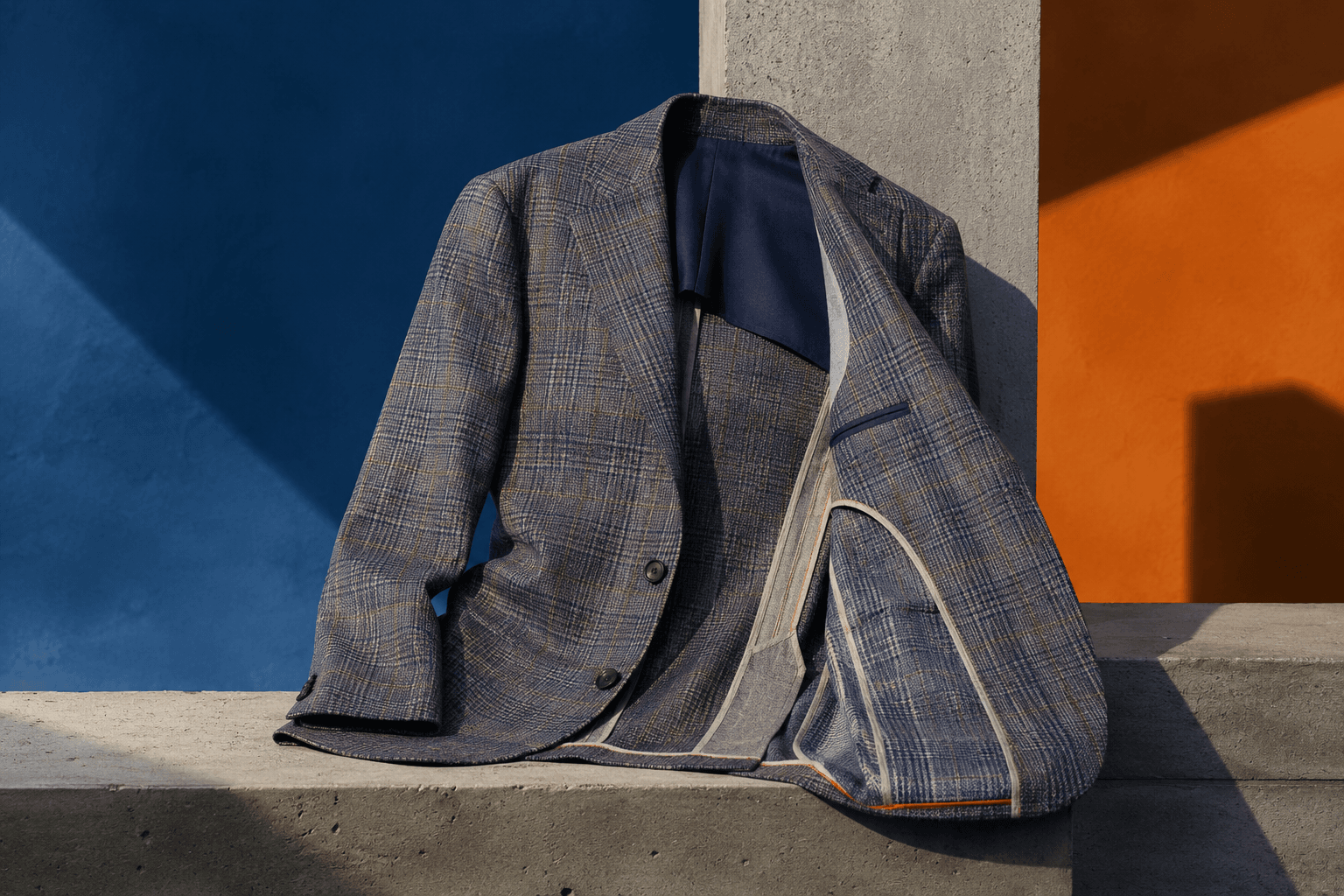
Unlined and half-lined garments can be excellent because their interiors must be clean enough to remain exposed. Inspect seam finishing more closely in those cases. Bound seams, clean overlocking or other neat methods can all be appropriate depending on design and price. The absence of lining is a construction choice; poor execution is a separate issue.
Hardware should be replaceable, secure and proportionate
Buttons attract attention because they are easy to market, but material is only one part of quality. Check whether buttons are securely attached, whether shanks allow the fabric to sit comfortably when closed, and whether spare buttons are supplied where useful. A beautiful natural button sewn poorly is less valuable than a simpler one that functions correctly and can be replaced when worn.
Operate zips, snaps and hooks several times. They should move cleanly without catching the surrounding fabric. Examine whether a zip is supported by the garment or pulling against a thin edge. Pockets should open without distorting the whole front. Hardware should feel scaled to the cloth: an unnecessarily heavy metal zip can drag on lightweight fabric, just as a fragile closure can feel inadequate on a dense coat.
Repairability enters here. Standard buttons, accessible zips and replaceable hardware make future maintenance easier than proprietary decorative systems that cannot be sourced. This does not mean every visible component must be generic; distinctive design has value. It means you should understand whether a small failure will require a minor repair or effectively retire the entire garment.
Finishing should support wear, not merely showroom perfection
Look at hems, facings, buttonholes, pocket edges and corners. Clean finishing helps prevent fraying and keeps construction stable, but do not confuse invisible stitching with superior stitching. Some garments deliberately expose seams or raw edges as design language. The relevant question is whether the chosen finish remains controlled under expected wear and care.
Pressing is another clue. Tailored garments rely on pressing to shape cloth, yet excessive heat or pressure can leave shine, impressions or flattened texture. Compare left and right lapels, pocket flaps and seams. If one side rolls naturally and the other looks crushed or distorted, finishing may be inconsistent. On soft casual garments, overly rigid pressing can be just as wrong as insufficient pressing on a formal trouser.
Check symmetry without expecting mathematical perfection from hand-shaped clothing. Sleeve pitch, pocket placement and hem level should make sense on the body. Try the garment rather than judging it only on the hanger. A beautifully finished interior cannot compensate for a pattern that pulls across the back or rotates the sleeve. Construction quality ultimately has to produce a garment that moves.
Make repairability part of the purchase price
The best inspection ends with a future question: what happens after damage? Look for hems that can be reworked, enough cloth where likely alterations may occur, buttons that can be resewn, seams that a tailor can access, and fabric that can plausibly be patched or rewoven. Not every garment must be endlessly repairable, but knowing its constraints changes how rational the price becomes.
Ask the retailer about repair services, spare components and alteration policy, and separate those concrete answers from sustainability slogans. If a brand claims long life but cannot replace a signature fastening or provide basic care guidance, the claim is weaker. Conversely, a simple garment with straightforward construction may be easier for a local tailor to maintain for years even without a formal brand program.
This is the useful core behind understated luxury: fewer symbolic claims, more attention to the object. Fabric should suit the cut, seams should secure stress, lining should improve function, hardware should operate cleanly, finishing should be controlled and repairs should be imaginable. None of those details guarantees value alone, but together they provide a far better buying argument than an invisible logo and a visible price.
Practical checklist
- Read the full fiber and care information, then handle the fabric for density, recovery and suitability.
- Turn the garment inside out and inspect seams, stress points and loose threads.
- Check visible stripe or check alignment at major joins where matching is reasonable.
- Test buttons, zips, pockets and lining for clean operation and secure attachment.
- Look for useful hem, side-seam or waist allowance if future alteration matters.
- Ask whether damaged hardware or worn areas can be repaired or replaced.
Questions and answers
Are hand stitches always a sign of higher-quality clothing?
No. Handwork can be valuable where it provides flexibility, shaping or a specific finish, but machine stitching can be stronger, more consistent and entirely appropriate in many areas. Decorative hand-looking stitches can also be added without improving function. Judge the result: are seams secure, edges controlled, stress points reinforced and the garment shaped well? Construction quality is the interaction of material, pattern, engineering and execution, not the amount of visible hand labor.
Does pattern matching prove a garment is luxury quality?
It is one useful clue, especially with obvious checks or stripes at prominent joins, because matching can require additional layout attention and sometimes more cloth. But it is not a universal requirement. Darts, curved seams, pockets, fabric width and design intent can make perfect alignment impossible or undesirable. Treat thoughtful matching as evidence of care, then continue inspecting fit, seam security, lining, hardware and fabric suitability before drawing a broader quality conclusion.
What seam allowance should a high-quality garment have?
There is no single correct number. Seam allowance depends on garment type, fabric, production method and whether future alterations are expected. Tailored trousers and jackets may contain useful inlay at particular seams, while lightweight shirts or knitwear can be engineered differently. The practical test is whether the seam is secure and appropriately finished and, if alteration matters to you, whether enough usable cloth remains in the relevant location for a competent tailor to work with.
Is a fully lined garment better than an unlined one?
Not automatically. Lining can improve comfort, opacity, movement and internal protection, but it also adds weight and can reduce breathability. Some summer jackets, trousers, dresses and coats are intentionally half-lined or unlined to achieve a lighter result. Quality lies in whether that choice suits the fabric and purpose and whether exposed internal seams are finished appropriately. A cheap lining can also undermine an otherwise good garment, so evaluate material and attachment rather than presence alone.