
Answer in brief
Linen does not need to look pressed into perfect flatness. Care it gently, respect the garment label and use moisture, air and selective pressing to keep structure without erasing character.
Treat the care label as the garment specification
Linen is a fiber, not a complete care instruction. A shirt can contain fusible interfacing, contrast thread, buttons, embroidery or a blended fabric that changes the safe treatment. GINETEX notes that care symbols address the critical characteristics of the whole textile article, including coloring, finishing and accessories. That is why generic advice such as “linen can take heat” should never outrank the label sewn into the actual garment.
Read the sequence before the first wash: washing, bleaching, drying, ironing and professional care. The symbols describe maximum permitted treatment, not a requirement to use the harshest option. GINETEX explicitly notes that milder treatment and lower temperatures are allowed. In practice, the least aggressive method that achieves cleanliness is often a sensible default for clothing that is being washed frequently during hot weather.
In Spain, hot conditions can vary sharply by region and day; AEMET publishes climatological data precisely because there is no single “Spanish summer” condition. Your care routine should respond to use. A linen shirt worn through a humid commute may need washing sooner than a loose overshirt worn for dinner, while both still follow their individual labels. Frequency and intensity are separate decisions.
Wash for cleanliness without creating avoidable creases
The Alliance for European Flax-Linen & Hemp recommends checking the care label and, for many linen apparel items, using a delicate 30°C wash with mild detergent while avoiding intense spinning. Those are useful general principles, but the label remains authoritative. The practical objective is to limit unnecessary heat and mechanical stress while giving water and detergent enough room to move through the garment.
Do not pack the drum tightly. Crowding increases compression and can leave garments twisted into hard folds. Fasten or secure elements according to the manufacturer’s instructions, empty pockets and separate items that may abrade delicate surfaces. If a stain needs pretreatment, test the chosen product in an inconspicuous area and follow both detergent and garment instructions rather than escalating automatically to hotter water or bleach.
When the cycle ends, remove linen promptly. A damp garment left crumpled in a drum develops creases that become more difficult to relax as it dries. Shake it gently, straighten the placket, align side seams and smooth cuffs or waistbands by hand. This two-minute reshaping step often reduces the amount of later pressing more effectively than trying to iron every wrinkle flat.
Use spin speed and handling to protect the surface
Linen is often valued for a crisp yet irregular surface. Excessive mechanical action can make that surface look beaten rather than relaxed. If the label and machine allow, choose the appropriate mild cycle and avoid a more aggressive spin than necessary. GINETEX’s symbol system distinguishes normal, mild and very mild washing specifically because mechanical treatment is part of care, not only water temperature.
After washing, resist wringing a wet linen garment by hand. Twisting concentrates force into narrow lines and can distort seams. Instead, let the machine complete the permitted spin, support the garment when lifting it, then reshape it. For hand-wash-only pieces, press excess water out gently according to label guidance rather than twisting. Heavier wet garments deserve especially careful support because water adds temporary weight.
A relaxed texture is not the same as uncontrolled distortion. Look at the grain and seams while the item is damp. If one side seam has spiraled or a pocket flap has folded inward, correct it before drying. Small adjustments at this stage preserve construction while still allowing the natural fine creasing that gives linen its visual character.
Dry in a way that preserves shape and color
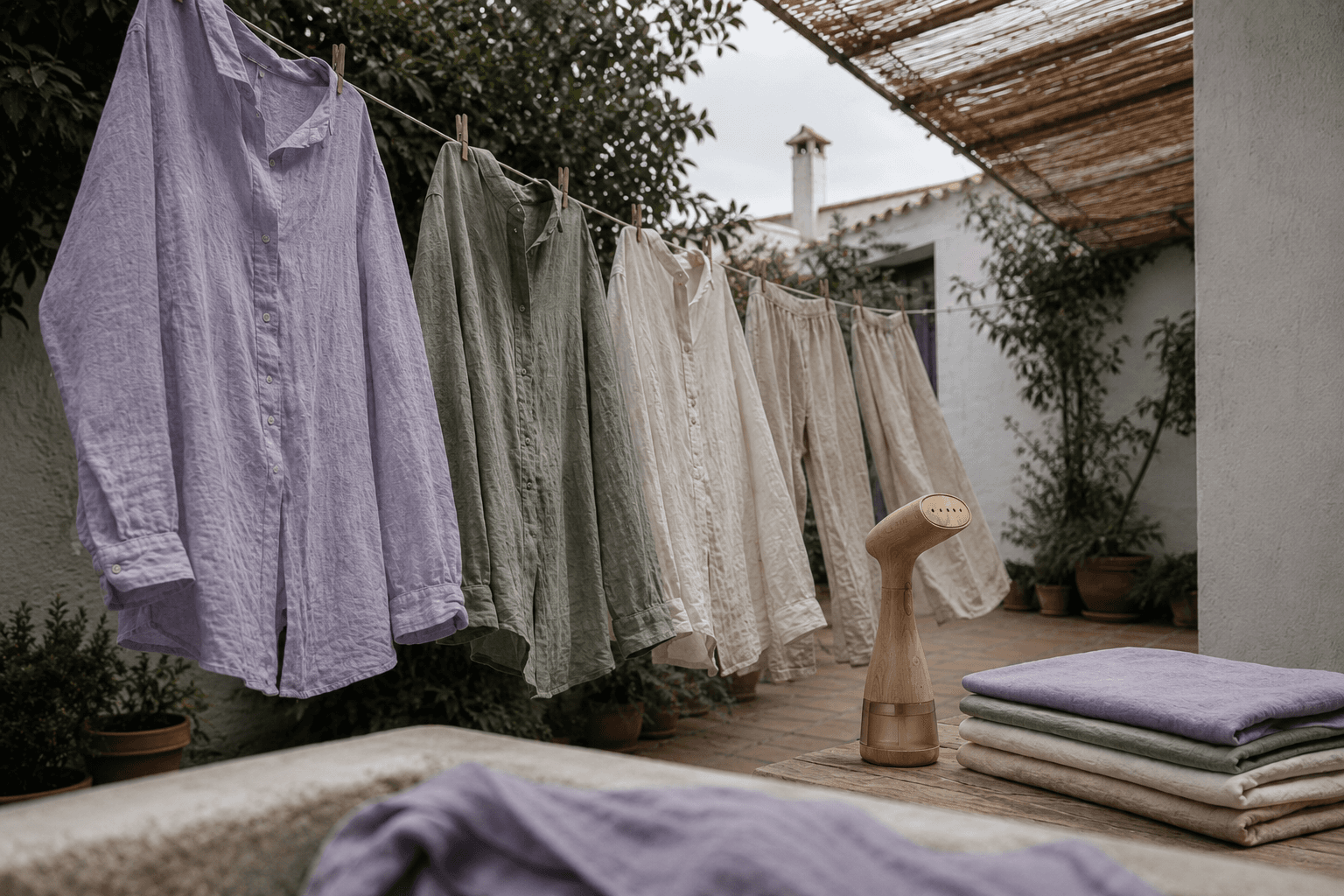
Alliance guidance favors air drying in shade for linen and cautions that excessive heat can contribute to shrinkage. Where the garment label permits natural drying, shade is especially useful in bright hot weather because it avoids prolonged direct solar exposure while letting air do the work. Hang or lay the piece according to its structure; a shirt can usually hang, while a heavy or loosely shaped item may need flat support.
Use a hanger wide enough to support shoulders without creating points, and align collars, cuffs and hems while damp. Trousers can hang from the waistband or be folded over a broad bar if that does not mark the fabric. Leave space between garments so moisture can escape. Fast drying is convenient, but a tightly packed balcony rack can hold humid air between layers and set wrinkles in awkward positions.
Do not interpret sunny weather as permission to ignore the drying symbol. If tumble drying is prohibited, keep the garment out of the dryer; if it is permitted, remain within the stated severity. GINETEX emphasizes that the care label concerns the complete item, so even robust linen fabric may be attached to components that tolerate less heat. The safest routine is label first, climate second.
Decide which wrinkles are texture and which are disorder
Linen creases readily because bending leaves visible changes in the fabric surface. Trying to eliminate every crease after every wear defeats much of the material’s relaxed character and adds repeated heat or steam exposure. Instead, divide wrinkles into two groups. Soft, distributed creasing across sleeves or the lap can look natural; hard folds at a collar, twisted placket, pocket or trouser crease can make the garment look neglected.
Correct the structural wrinkles and leave the expressive ones. A collar can be pressed flat, a front placket aligned, a trouser waistband smoothed and a hem reset while the body retains gentle movement. This selective method keeps the garment legible: construction lines remain clear, but the cloth still reads as linen rather than a perfectly flat synthetic imitation.
If a dress code requires a sharper finish, increase pressing only as far as the label allows. The goal is not to prove that linen can be made smooth; it is to choose the finish appropriate to the garment. A business shirt may benefit from more pressing than a beach overshirt, even when both are made from similar fiber. Care should serve intended use.
Iron damp linen selectively and without brute force
Alliance care guidance notes that linen can be easier to iron while still damp. Moisture helps relax creases, which means you may need less repeated passage with the iron. Check the symbol for the maximum permitted temperature and remember that GINETEX advises setting heat from the care label rather than fiber content alone. A linen blend, coated fabric or decorated garment may require a lower setting than plain linen.
Work from structural zones outward. Press collars and cuffs, then plackets, pocket edges, waistbands and hems. For a trouser with a deliberate crease, align both legs carefully before pressing so you do not create a second line. On dark or pressure-sensitive surfaces, pressing from the reverse or using a clean pressing cloth can help reduce unwanted shine, subject to the label and garment instructions.
Steamers can relax light creasing but should not be treated as automatically safer. Heat and moisture are still being applied, and some constructions react poorly. Keep the garment supported, avoid concentrating steam on adhesives or embellishments, and allow it to dry fully before wearing or storing. If the manufacturer calls for professional care, do not improvise a home treatment simply because the base fabric is linen.
Manage sweat and repeat wear before it becomes a stain problem
Hot-weather clothes encounter perspiration, sunscreen, deodorant and urban dust. The longer residues sit, the more difficult they can be to remove, but automatic daily washing is not always necessary. After wear, inspect high-contact zones such as collar, underarm and waistband. If the garment is only lightly worn, airing it fully before putting it away may be enough; if visibly soiled or strongly exposed to sweat, follow the permitted cleaning process.
Treat stains early and specifically rather than washing the whole garment more harshly. Blot liquid instead of rubbing it deeper into the weave. Use a stain product compatible with the care label and test colorfastness where appropriate. Avoid chlorine bleach unless the label explicitly permits it; GINETEX’s bleaching symbol exists because whitening agents that are safe for one item may irreversibly affect another.
Sunscreen and body products can transfer to collars and cuffs, so let skincare dry before dressing when practical. This is less about preserving an immaculate surface than reducing buildup that demands aggressive cleaning later. A hot-weather care routine works best when it distributes effort: small prevention, prompt airing and targeted cleaning instead of repeated maximum-intensity washing.
Store linen dry, supported and ready for the next heat cycle
Never store linen while damp. Residual moisture in a closed wardrobe can create odor and conditions favorable to microbial growth, while deep compression can set hard creases. Let garments finish drying after steaming or ironing, then place them where air can circulate. Shirts, dresses and tailored trousers usually benefit from supportive hangers; very heavy or loosely structured items may be folded to prevent stretching.
When folding, use broad folds and avoid putting the garment at the bottom of a dense stack. If a sharp crease develops, a little moisture and permitted pressing later can relax it, but preventing compression is simpler. Keep storage away from prolonged direct sunlight, which can affect color over time, and ensure the wardrobe itself is dry and ventilated during periods of high ambient humidity.
The maintenance target is not museum perfection. Linen is supposed to move, bend and record wear. Good care keeps stains from setting, seams from distorting, colors from being unnecessarily stressed and structural details readable. Once those fundamentals are controlled, the remaining soft wrinkles are not a failure to care for the fabric; they are part of the material language that makes linen useful in hot weather.
Practical checklist
- Read the full care label before the first wash.
- Use a mild cycle and avoid overloading the drum when the label allows machine washing.
- Remove linen promptly, reshape seams and air dry in shade when appropriate.
- Iron or steam selectively while the fabric retains slight moisture if the label permits.
- Store only when completely dry and avoid crushing garments under heavy stacks.
Questions and answers
Should linen be ironed completely smooth?
Not unless the garment and occasion call for a very crisp finish. Linen’s visible creasing and slight surface variation are normal parts of how the fabric wears. For shirts, jackets or trousers, you can press structural areas such as collars, plackets, waistbands and hems while leaving larger panels softly textured. If you do iron, follow the care label; Alliance guidance notes that linen is easier to iron while damp, but trims, finishes and blends can impose different limits.
Can I machine-wash linen after every hot day?
Frequent washing may be reasonable for garments exposed to sweat, but the correct process depends on the specific care label. Use the least intensive treatment that gets the garment clean, because temperature, detergent, spin and mechanical action all contribute to wear and creasing. Airing a lightly worn piece before deciding to wash can reduce unnecessary cycles. When machine washing is allowed, avoid overloading, remove the item promptly and reshape it before drying.
Is tumble drying always bad for linen?
No universal rule applies. Some linen garments permit tumble drying and others do not, so the care symbol is decisive. GINETEX explains that care labels specify the maximum permitted treatment and that milder treatment is acceptable. Where air drying is practical and permitted, it can reduce heat exposure and gives you more control over shape. If a label allows tumble drying, use the permitted setting and avoid leaving the garment baking in the machine after it is dry.
How should linen be stored in a hot climate?
Store it clean and completely dry in a ventilated, dry place away from persistent direct sun. Hanging works well for shirts, dresses and trousers if the hanger supports the garment without stretching; heavier knits or loosely structured linen may be better folded. Avoid compressing linen beneath heavy stacks, which can set deep folds. If seasonal storage is necessary, use breathable protection rather than trapping residual moisture in an impermeable bag.